
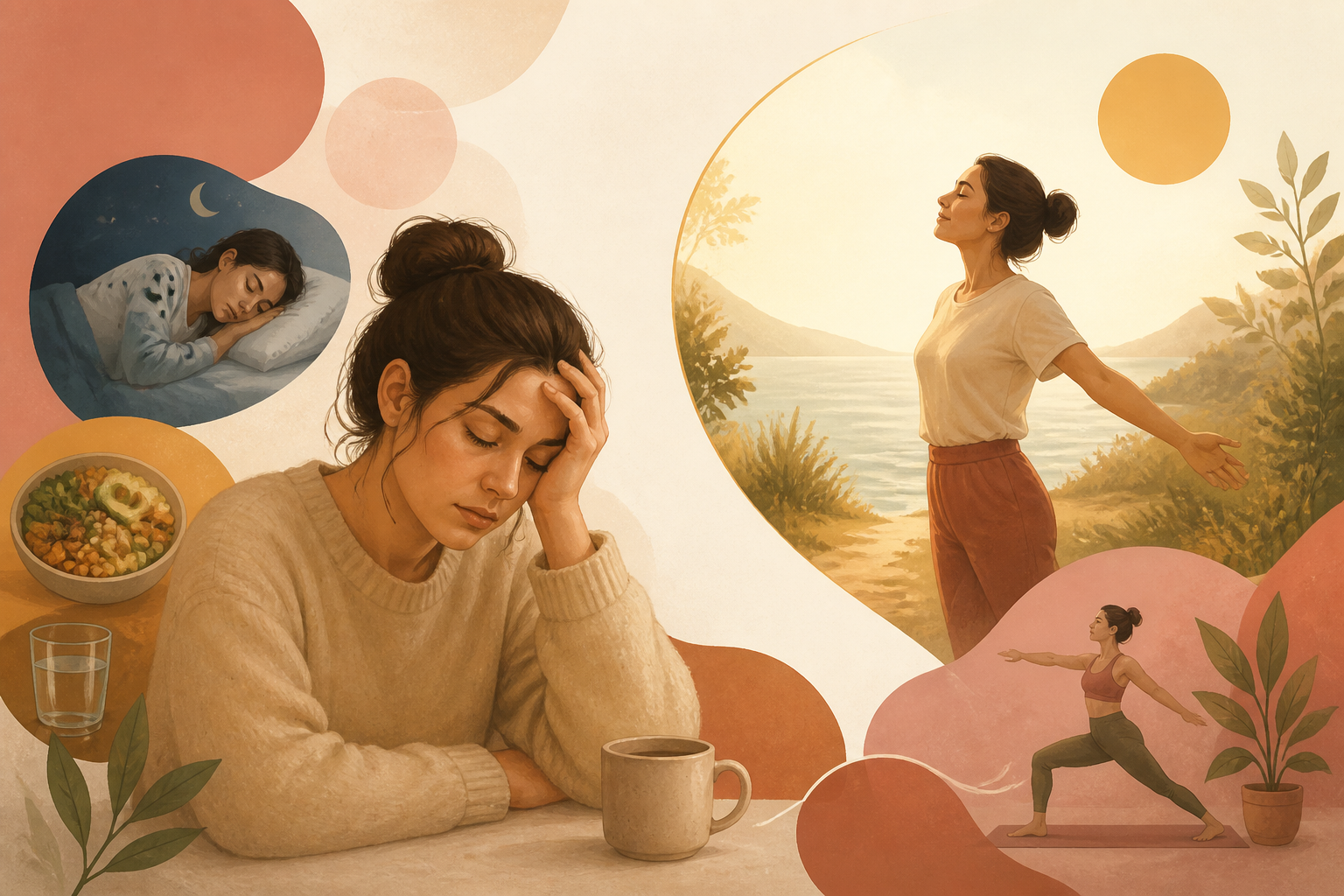
To stop feeling tired all the time, you must prioritise consistent sleep cycles, stabilise your blood sugar, and manage your daily light exposure. Most fatigue stems from a combination of poor sleep hygiene, dehydration, and sedentary behaviour. Addressing these three areas usually results in noticeable energy improvements within seven to ten days.
Why do I feel exhausted even after a full night of sleep?
You may feel exhausted because the quality of your sleep is low or your internal body clock is misaligned. Even if you spend eight hours in bed, disruptions like sleep apnoea, high evening alcohol consumption, or excessive blue light exposure can prevent you from entering deep, restorative sleep stages. When these cycles are interrupted, your brain does not effectively clear metabolic waste, leaving you feeling groggy the next morning.
Sleep inertia is another common factor. This is the period of grogginess immediately after waking. If you wake up during a deep sleep stage—often caused by hitting the snooze button—this feeling can persist for hours. Maintaining a strict wake-up time, even on weekends, helps the body predict when to start producing cortisol to wake you up naturally.
Dietary choices also play a role in morning fatigue. A high-sugar snack late at night can cause a blood sugar spike followed by a crash while you sleep. This internal fluctuation often leads to micro-awakenings that you might not remember, but which significantly degrade your rest. Focusing on health and wellness involves looking at the 24-hour cycle of your habits, not just the time spent with your eyes closed.
How does hydration affect daily energy levels?
Dehydration reduces the total volume of your blood, making it thicker and harder for your heart to pump oxygen and nutrients to your brain and muscles. Even a 1% to 2% drop in body water levels can lead to symptoms of fatigue, brain fog, and irritability. Most adults require between 2 and 2.5 litres of fluid daily, though this increases with physical activity or high temperatures.
Many people mistake thirst for hunger or tiredness. When the brain detects a fluid deficit, it slows down non-essential processes to conserve energy. This manifests as a "slump" where you feel physically heavy and mentally slow. Drinking a large glass of water immediately upon waking is one of the simplest life hacks to kickstart your metabolism and clear morning fog.
Common causes of daytime fatigue
While every individual is different, several recurring factors contribute to persistent tiredness in the UK population. Understanding these can help you identify which areas of your life require adjustment.
- Sedentary behaviour: Paradoxically, moving less makes you feel more tired. Physical activity increases blood flow and encourages the production of mitochondria, the energy-producing parts of your cells.
- Nutrient deficiencies: Low levels of iron, Vitamin B12, or Vitamin D are frequent culprits. Vitamin D deficiency is particularly common in the UK and Ireland during winter months.
- Caffeine timing: Consuming caffeine too late in the afternoon blocks adenosine receptors in the brain. Adenosine is the chemical that builds up throughout the day to make you feel sleepy at night.
- Stress and "open loops": Mental fatigue is as draining as physical fatigue. Carrying a long list of unfinished tasks creates a cognitive load that saps energy.
What is the best routine to sustain energy throughout the day?
The best routine for sustained energy involves front-loading your light exposure and timing your meals to avoid insulin spikes. Natural sunlight in the first 30 minutes of waking signals to your brain that the day has begun, which sets a timer for melatonin production later that night. This simple act of going outside helps regulate your circadian rhythm more effectively than any supplement.
Stable energy relies on stable blood sugar. When you eat refined carbohydrates or sugary snacks, your blood glucose levels rise rapidly. Your body releases insulin to clear this sugar, often causing a "crash" that leaves you reaching for more sugar or caffeine. Choosing complex carbohydrates, healthy fats, and proteins ensures a slow, steady release of energy into the bloodstream.
| Time of Day | Action for Energy | Biological Benefit |
|---|---|---|
| 07:00 - 08:00 | View natural light | Resets circadian rhythm and boosts cortisol. |
| 10:00 - 11:00 | First caffeine intake | Avoids the early morning adenosine crash. |
| 13:00 - 14:00 | Short walk after lunch | Aids digestion and prevents the post-meal slump. |
| 16:00 | Stop caffeine consumption | Ensures caffeine is metabolised before sleep. |
| 20:00 | Dim overhead lights | Triggers melatonin production for sleep. |
Can changing my diet really stop me from feeling tired?
Changing your diet can significantly reduce fatigue by preventing the inflammatory responses and blood sugar fluctuations associated with processed foods. A diet rich in whole foods provides the magnesium, iron, and B vitamins necessary for energy metabolism. Small, frequent changes to how you eat are often more sustainable than radical dietary shifts.
For those looking into personal development, managing physical energy is a foundation for mental growth. If your body is constantly fighting to process heavy, ultra-processed meals, you will have less cognitive energy for work or learning. Prioritising fibre and protein at breakfast can set the tone for the entire day's energy levels.
Iron deficiency is a particularly specific dietary cause of tiredness. It affects roughly 10% to 15% of women in the UK. Iron is essential for creating haemoglobin, which carries oxygen in the blood. Without enough oxygen reaching your tissues, you will feel exhausted regardless of how much you sleep. If you suspect a deficiency, a simple blood test from a GP can provide clarity.
The role of mental fatigue
We often ignore the fact that the brain uses about 20% of the body's total energy. Constant multitasking, notifications, and "context switching" drain your mental battery. To combat this, try the following techniques:
- Single-tasking: Focus on one activity for 25-50 minutes before taking a break.
- Brain dumping: Write down everything you need to do for the next day before you finish work to clear your mind.
Managing your energy is a skill that can be refined over time. By observing how your body reacts to different foods, sleep patterns, and activity levels, you can build a personal toolkit for staying alert and focused. More information on managing your lifestyle for long-term health can be found in our blog section.
Frequently asked questions
Is it normal to feel tired every afternoon?
A slight dip in energy in the early afternoon, known as the post-prandial dip, is a natural part of the human circadian rhythm. It usually occurs between 1:00 pm and 3:00 pm. You can minimise its impact by eating a lighter lunch, staying hydrated, and taking a brief walk to increase oxygen flow.
How long does it take to recover from chronic tiredness?
If your fatigue is caused by lifestyle factors, you should start to feel an improvement within 7 to 14 days of consistent habit changes. This includes sticking to a regular sleep schedule and improving hydration. However, if tiredness persists for more than four weeks despite these changes, you should consult a healthcare professional to rule out underlying conditions.
Does caffeine actually help with long-term fatigue?
Caffeine is a temporary mask for tiredness, not a cure. It works by blocking the signals in your brain that tell you that you are tired, rather than actually providing energy. Relying on it too heavily can lead to a cycle of poor sleep and increased dependency, which ultimately makes you feel more tired in the long run.
Can stress make me physically tired?
Yes, chronic stress keeps your body in a "fight or flight" state, which consumes a vast amount of physical energy. This leads to the production of high levels of cortisol, which can eventually exhaust your system and leave you feeling physically drained. Finding ways to lower your baseline stress is essential for recovering your physical vitality.