
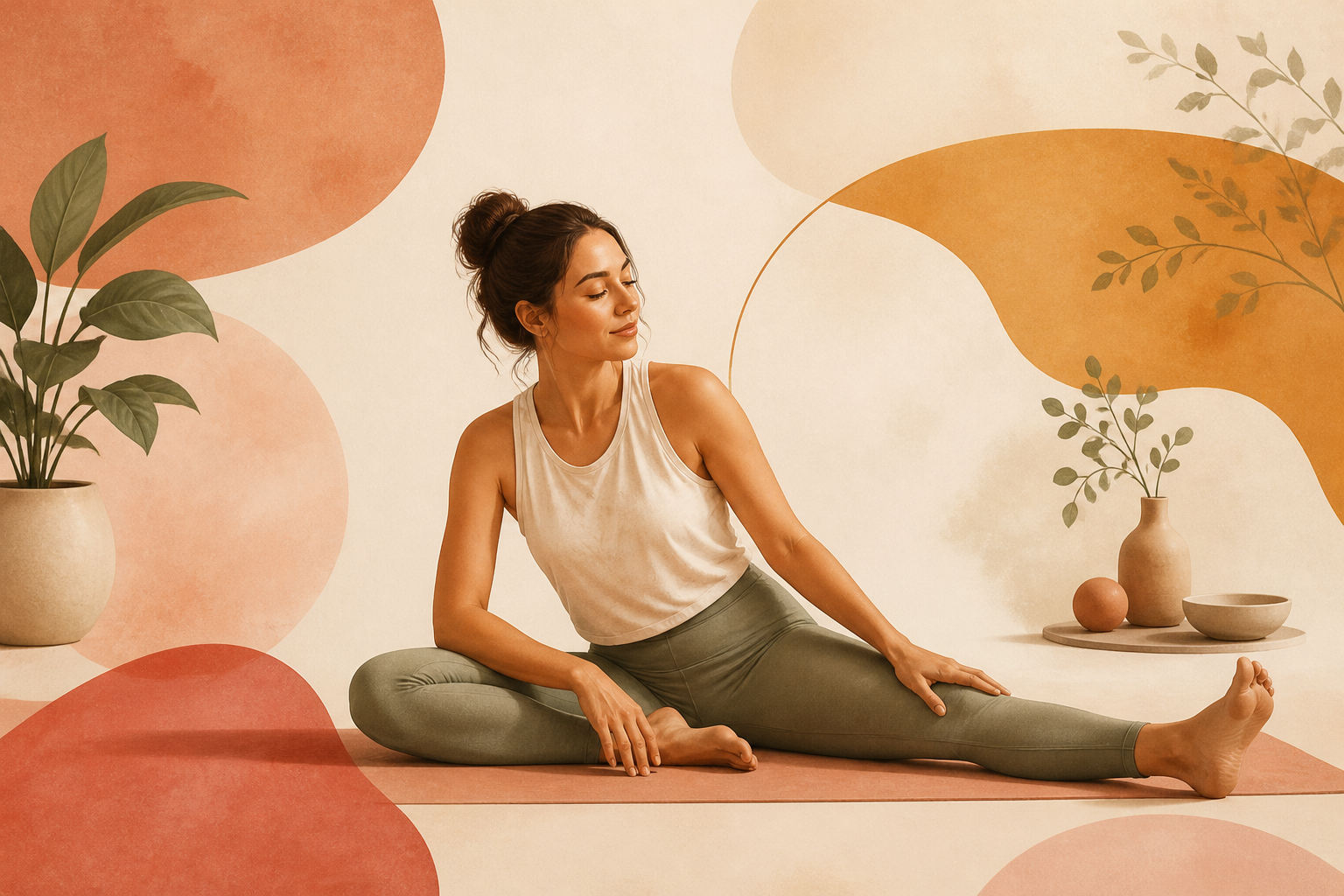
To start a stretching routine for flexibility, perform static stretches for all major muscle groups at least two to three times per week. Hold each stretch for 30 to 60 seconds while breathing deeply. You should feel mild tension but never sharp pain, and you must warm up with five minutes of light movement before beginning.
How often should you stretch to see results?
You should aim to stretch at least two to three times per week to maintain or improve your current range of motion. Research suggests that daily stretching yields the fastest progress, but consistency over several months is more important than frequency in a single week. If you stop stretching for more than four weeks, your muscles will likely return to their original level of stiffness.
Flexibility is a physiological trait that requires regular maintenance. Unlike cardiovascular fitness, which can drop off quickly, flexibility tends to stick around slightly longer but requires a dedicated health and wellness habit to improve. When you stretch, you are not just lengthening the muscle fibres; you are also training your nervous system to tolerate a greater range of motion. This process, known as sensory tolerance, takes time to develop.
For most adults, a 10 to 15-minute session is sufficient. Trying to do an hour of stretching once a week is significantly less effective than doing 10 minutes every other day. You can track your progress by measuring how far you can reach in specific poses, such as the sit-and-reach test, every four weeks.
What are the different types of stretching?
There are two primary types of stretching: dynamic and static. Dynamic stretching involves active movements that take your joints through a full range of motion, while static stretching involves holding a single position for a set period of time.
Understanding when to use each type is crucial for safety and effectiveness. The following table breaks down the differences and the best times to use each method:
| Type | Description | Best Time to Use | Example |
|---|---|---|---|
| Dynamic | Controlled, repetitive movements. | Before exercise (Warm-up). | Leg swings, arm circles. |
| Static | Holding a position without moving. | After exercise or at night. | Hamstring stretch, calf stretch. |
| Ballistic | Bouncing or jerking movements. | Rarely recommended (High risk). | Bouncing at the bottom of a toe touch. |
| PNF | Contracting and relaxing the muscle. | Advanced sessions for rapid gains. | Partner-assisted hamstring stretch. |
For a beginner's stretching routine for flexibility, static stretching is the safest and most effective starting point. It allows you to focus on your breathing and body alignment without the risk associated with momentum-based movements. You can learn more about physical foundations in our life hacks section for daily efficiency.
How do you perform a safe stretch?
A safe stretch begins with a warm muscle and ends before you feel any sharp or radiating pain. You should move slowly into the position until you feel a "pull" or tension that rates about a 4 or 5 on a scale of 10. Once you reach this point, remain still and avoid the urge to bounce, which can cause micro-tears in the muscle tissue.
Breathing is the most overlooked part of a stretching routine. When you hold your breath, your body enters a "fight or flight" state, causing muscles to tighten up to protect themselves. By exhaling deeply as you move into the stretch, you signal to your nervous system that it is safe to relax. This allows the muscle to actually lengthen. Aim for four seconds of inhalation and six seconds of exhalation throughout every hold.
Key safety markers include:
- Warm up first: Never stretch "cold" muscles. Walk for five minutes or stretch after a warm bath.
- No pain: Discomfort is normal; pain is a signal to stop immediately.
- Alignment: Keep your spine neutral. If you are stretching your hamstrings, hinge from the hips rather than rounding your lower back.
- Symmetry: Always stretch both sides of the body equally to prevent muscular imbalances.
Which muscles should beginners focus on?
Beginners should focus on the large muscle groups that tend to tighten during long periods of sitting or standing. These include the hamstrings, hip flexors, calves, chest, and lower back. Targeting these areas provides the greatest benefit for posture and general mobility.
The hip flexors are particularly important for office workers. Sitting for eight hours a day keeps these muscles in a shortened position, which can lead to lower back pain. Similarly, stretching the chest muscles (pectorals) helps counteract the "slumped" posture often caused by looking at phones or computers. Integrating these into your personal development goals for physical health can improve your overall energy levels.
A standard beginner routine might look like this:
- Forward Fold: Targets hamstrings and lower back (Hold for 30 seconds).
- Lunge Stretch: Targets hip flexors (Hold for 30 seconds per side).
- Doorway Stretch: Targets the chest and shoulders (Hold for 30 seconds).
- Cobra Pose: Targets the abdominals and improves spinal extension (Hold for 20 seconds).
- Calf Stretch: Targets the lower leg (Hold for 30 seconds per side).
Why does flexibility take so long to improve?
Flexibility takes time because you are overcoming the body’s "stretch reflex," a safety mechanism that prevents muscles from tearing. When you stretch a muscle, sensors called muscle spindles send a signal to the spinal cord, which then tells the muscle to contract. Over weeks of consistent practice, you desensitise this reflex, allowing the muscle to stay relaxed at longer lengths.
Age, genetics, and hydration also play roles. As we age, our tendons and muscles naturally lose some water content and become less elastic. This is why a 20-year-old may see results in two weeks, while a 50-year-old may require six weeks of consistent effort to see the same change. Staying hydrated is a simple way to support your progress; connective tissue functions best when it is well-hydrated. For more on building these long-term habits, see our guide on how to maintain consistency.
It is also important to note that flexibility and mobility are not the same thing. Flexibility is the passive range of motion (how far someone could push your leg), while mobility is the active range of motion (how far you can move your leg using your own strength). A good routine eventually incorporates both to ensure the joints are stable as well as bendy.
Frequently asked questions
Is it better to stretch in the morning or at night?
There is no "wrong" time, but each has different benefits. Morning stretching can help wake up the body and reduce stiffness from sleep, while evening stretching is often more effective for deep flexibility because your body temperature is higher after a day of movement. Many people find evening routines more relaxing for better sleep quality.
Should I stretch before or after a workout?
Current sports science suggests you should perform dynamic movements (like leg swings) before a workout to prepare the joints. Static stretching (holding a pose) is best reserved for after a workout when the muscles are warm and pliable. Static stretching before explosive exercise may temporarily reduce muscle power.
Why do my muscles shake when I stretch?
Shaking is usually a sign that the muscle is fatigued or that you are pushing too deep into the range of motion. It can also occur when the nervous system is struggling to control the muscle in a new position. If you start to shake, back off the intensity of the stretch slightly until the shaking stops, then focus on your breath.
How long does it take to get flexible?
Most people will notice a temporary increase in flexibility immediately after a session, but permanent changes usually take four to six weeks of consistent practice. Significant changes in posture or the ability to do things like the splits can take six months to a year of dedicated training. Consistency is the most important factor in these long-term gains.
For more information on managing your physical health and lifestyle habits, visit our blog or browse the wealth knowledge base for related life-skill resources.