
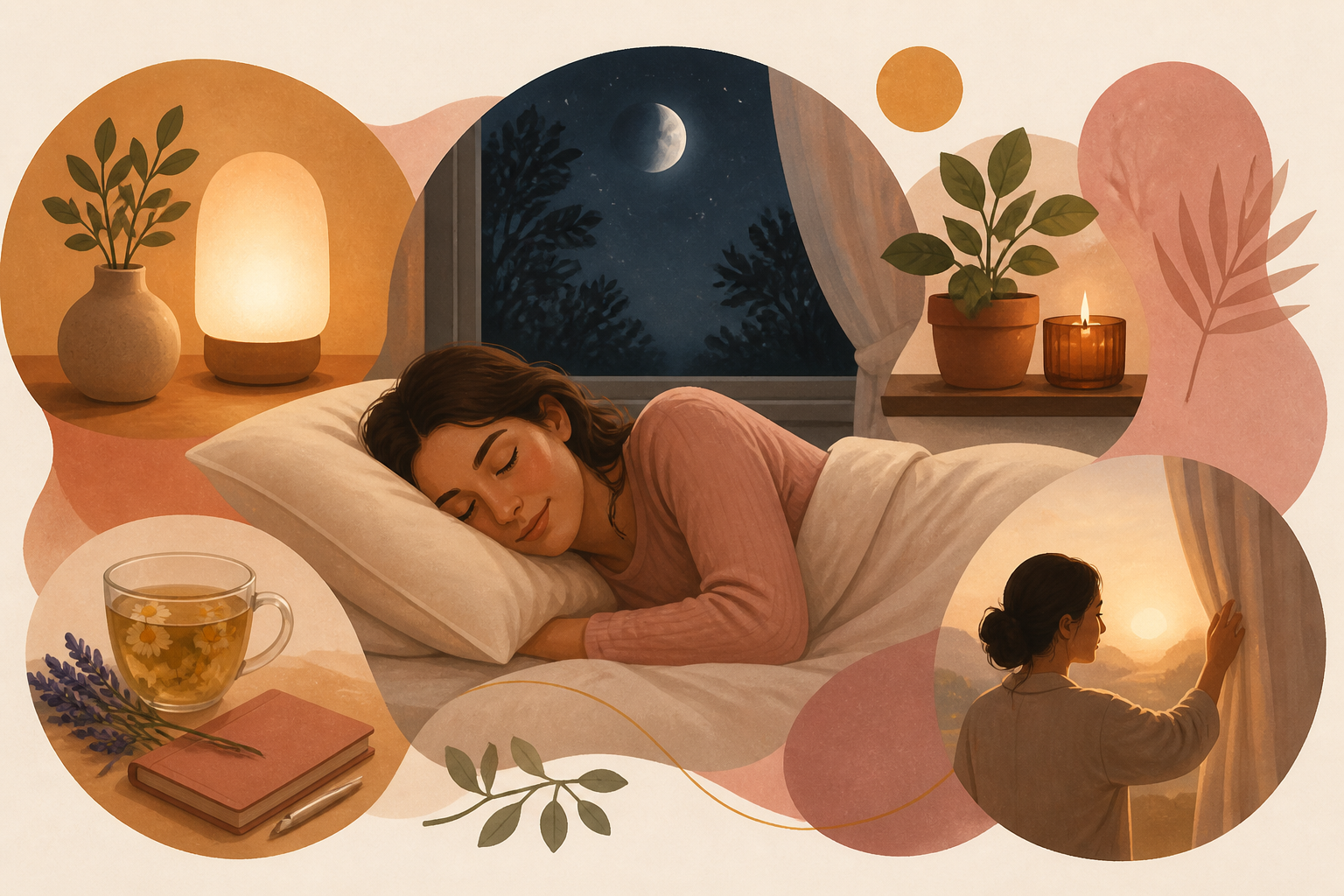
You can improve sleep quality without medication by regulating your circadian rhythm, optimising your bedroom environment, and managing your evening light exposure. Key actions include maintaining a consistent wake-up time, keeping your bedroom temperature around 18°C, and avoiding blue light from screens for at least 60 minutes before bed to allow natural melatonin production.
How does light exposure affect sleep quality?
Light exposure is the primary signal that tells your brain whether to be alert or to prepare for rest. When your eyes detect light, specifically blue wavelengths from the sun or electronic devices, they signal the brain to suppress melatonin, the hormone responsible for sleep. By managing light, you can manually trigger your body's natural drive to sleep at the correct time.
During the day, you should aim for at least 20 to 30 minutes of natural sunlight, ideally shortly after waking. This sets your internal clock. In the evening, the opposite is necessary. Dimming the lights in your home two hours before bed and putting away smartphones or tablets helps your brain transition into a state of rest. If you must use a screen, high-quality blue light filters or amber-tinted glasses may offer a slight benefit, though total avoidance is more effective.
What is the ideal bedroom environment for deep sleep?
The ideal bedroom environment is cool, dark, and quiet, designed to minimise sensory interruptions during the night. Research suggests that the human body needs its core temperature to drop by about 1°C to initiate sleep, which is why a room that is too warm often leads to tossing and turning. Keeping the thermostat between 16°C and 19°C is generally recommended for most adults.
Darkness is equally critical. Even small amounts of light from a streetlamp or an alarm clock can penetrate the eyelids and disrupt sleep cycles. Blackout curtains or a comfortable eye mask are inexpensive ways to ensure total darkness. Noise management can be handled through earplugs or a white noise machine if you live in a busy urban area where sudden sounds might startle you out of light sleep phases.
Consider the following factors when auditing your sleeping space:
- Temperature: Aim for 18°C; anything over 24°C or under 12°C typically impairs sleep.
- Lighting: Use blackout blinds to eliminate 100% of external light.
- Air Quality: A slightly cracked window can reduce CO2 levels, which may improve sleep depth.
- Bedding: Use natural fibres like cotton or linen which breathe better than synthetic polyesters.
Why is a consistent wake-up time important?
A consistent wake-up time anchors your circadian rhythm, making it easier to fall asleep at the same time every night. Many people make the mistake of "catching up" on sleep during the weekend, but this creates a phenomenon known as social jetlag. Waking up two hours later on a Sunday than you do on a Monday confuses the body's internal clock, making it harder to feel tired on Sunday night.
If you stay up late one night, it is usually better to wake up at your normal time the next morning and perhaps take a short 20-minute nap in the early afternoon. This keeps your rhythm stable. Within about 14 to 16 hours of waking up, your "sleep pressure"—driven by the buildup of a chemical called adenosine—will naturally reach a point where you feel ready for bed.
How do food and drink choices impact rest?
What you consume throughout the day has a direct physiological impact on how quickly you fall asleep and the quality of your REM cycles. Caffeine is the most common disruptor; it has a half-life of about 5 to 6 hours. This means if you drink a cup of coffee at 4:00 pm, half of that caffeine is still in your system at 10:00 pm, potentially blocking adenosine receptors and keeping you awake.
Alcohol is another common misconception. While it may help you fall asleep faster because it is a sedative, it significantly fragments your sleep. As the alcohol is metabolised, it causes "micro-awakenings" and suppresses REM sleep, which is vital for emotional regulation and memory. You may spend 8 hours in bed, but the quality of that time is vastly reduced.
| Substance | Recommended Cut-off Time | Impact on Sleep |
|---|---|---|
| Caffeine | 8–10 hours before bed | Blocks sleep-inducing chemicals; increases latency. |
| Alcohol | 3–4 hours before bed | Reduces REM sleep; causes night sweats and waking. |
| Heavy Meals | 2–3 hours before bed | Indigestion and acid reflux can prevent deep rest. |
| Fluids (Water) | 1–2 hours before bed | Reduces the need for mid-night bathroom trips. |
Can physical activity improve sleep?
Regular physical activity is one of the most effective non-pharmacological ways to improve sleep quality. Engaging in aerobic exercise increases the amount of "slow-wave" sleep you get, which is the deep sleep where the body performs physical repairs and strengthens the immune system. However, timing matters. High-intensity exercise very late in the evening can raise your core body temperature and heart rate, making it harder to wind down.
For more information on balancing activity and rest, you can explore our health and wellness section. Integrating movement into your morning or afternoon is generally more effective for sleep than a late-night gym session. Even a 30-minute walk in the fresh air can contribute to a higher sleep efficiency score.
How do I build a better bedtime routine?
A bedtime routine acts as a bridge between the high-stress demands of the day and the calm required for sleep. This process should take about 30 to 60 minutes. During this time, the goal is to lower your heart rate and shift your nervous system from "sympathetic" (fight or flight) to "parasympathetic" (rest and digest).
- Lower the lights in the house to mimic the setting sun.
- Finish all work-related tasks and close your laptop to create a mental boundary.
- Perform a "brain dump" by writing down any worries or to-do list items for the next day.
- Engage in a low-stimulation activity, such as reading a physical book or taking a warm bath.
- Practice light stretching or deep breathing exercises to release physical tension.
You can find more practical advice on building sustainable daily habits in our personal development articles. Consistency is more important than perfection; doing a simple version of this routine 80% of the time will yield better results than a complex routine you only do once a week.
If you are looking for specific solutions to other daily challenges, our life hacks page offers further tips on optimising your home and schedule for better health. Managing your sleep is a fundamental skill that underpins almost every other aspect of physical and mental performance.
Frequently asked questions
Is it okay to use a phone in bed if I use a blue light filter?
While blue light filters help reduce some interference, the content on your phone is often the bigger problem. Social media, news, and work emails are designed to be psychologically stimulating, which keeps your brain alert and prevents you from entering a relaxed state. It is best to keep the phone in another room entirely.
How long should a nap be if I’m tired during the day?
The ideal nap is either 20 minutes or 90 minutes long. A 20-minute nap keeps you in light sleep and prevents "sleep inertia," the groggy feeling you get when waking from a deep sleep. A 90-minute nap allows for a full sleep cycle, but should be taken no later than 3:00 pm to avoid interfering with your main sleep period.
What should I do if I wake up in the middle of the night and can't get back to sleep?
If you are awake for more than 20 minutes, get out of bed. Go to another room with very dim lighting and do something quiet and boring, like reading a technical manual or folding laundry. Only return to bed when you feel physically sleepy; this prevents your brain from associating your bed with the frustration of being awake.
Does a warm bath really help you sleep?
Yes, but not for the reason you might think. A warm bath brings blood to the surface of your skin. When you get out of the bath, that heat escapes quickly, causing your core body temperature to drop. This rapid cooling signals to your brain that it is time to sleep.