
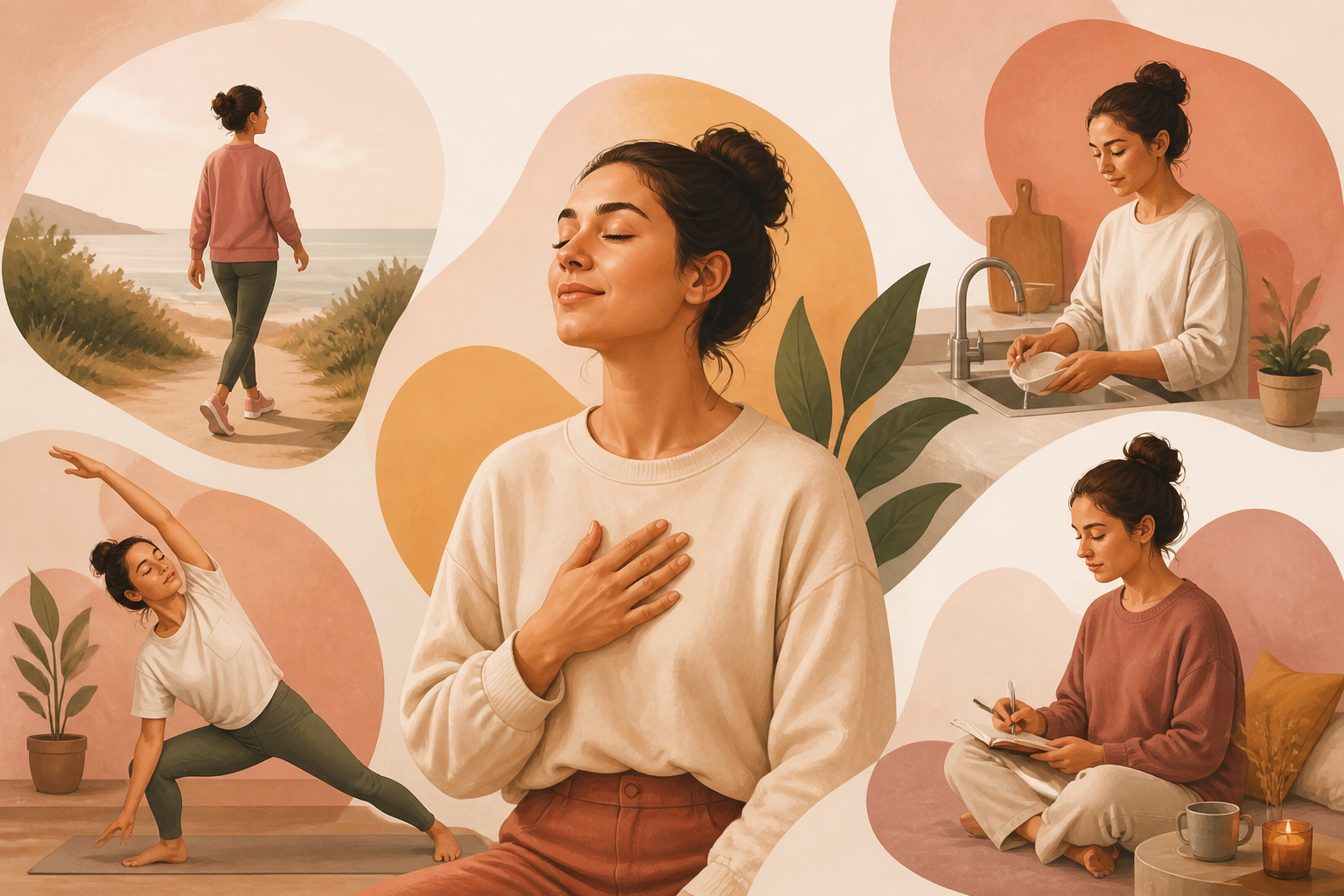
To start a meditation practice when you struggle to sit still, begin with short sessions of three to five minutes using active techniques like walking meditation or focused breathing. You do not need to be perfectly still to benefit; the goal is simply to notice when your mind wanders and gently bring your attention back to the present moment.
Why is it so hard to sit still during meditation?
Physical restlessness during meditation often stems from the body's natural response to sudden inactivity and the brain's habit of constant stimulation. When you remove external distractions, your nervous system may interpret the quiet as a cue to fidget or scan for problems. This is a common physiological reaction rather than a sign that you are incapable of mindfulness.
For many adults, the expectation of immediate calm creates internal pressure. This pressure triggers a "fight or flight" response, making your muscles feel tense and your mind feel scattered. Understanding that restlessness is a data point—not a failure—is the first step toward a consistent health and wellness routine.
How long should a beginner meditate each day?
A beginner should start with just three to five minutes of meditation per day to build the habit without overwhelming the nervous system. Consistency is more important than duration; practicing for five minutes every morning is more effective for brain plasticity than a single thirty-minute session once a week.
Research suggests that it takes approximately 66 days for a new behaviour to become automatic. By keeping the initial time commitment low, you reduce the mental barrier to starting. You can gradually increase your time by one minute each week as your comfort level grows. Most practitioners find a "sweet spot" between 10 and 20 minutes, but there is no requirement to reach these lengths to see improvements in stress levels.
| Stage | Duration | Primary Goal |
|---|---|---|
| Week 1-2 | 3 Minutes | Showing up every day |
| Week 3-4 | 5 Minutes | Noticing physical sensations |
| Week 5-8 | 10 Minutes | Observing thoughts without judgment |
| Month 3+ | 15-20 Minutes | Deepening focus and emotional regulation |
What are the best meditation techniques for restless people?
If traditional seated meditation feels impossible, active or sensory-focused techniques can provide a more accessible entry point. These methods give the body or mind a "job" to do, which can settle the urge to move.
- Walking Meditation: Instead of sitting, walk slowly in a quiet space. Focus entirely on the sensation of your feet hitting the ground—heel, ball, toe. This provides physical outlet for energy while training focus.
- Box Breathing: Inhale for four seconds, hold for four, exhale for four, and hold for four. The counting gives the mind a rhythmic task to follow.
- Body Scanning: Lie down and mentally move through each part of your body from toes to head, noting any tension. This is often easier for those who find sitting upright uncomfortable.
- Five Senses Technique: Acknowledge five things you can see, four you can touch, three you can hear, two you can smell, and one you can taste. This anchors you in your immediate environment.
Choosing the right technique is a core part of personal development, as it requires honest self-reflection about what actually works for your temperament. Do not feel obligated to follow a specific school of meditation if it causes significant distress.
Where should you sit to meditate?
You should sit wherever you can maintain a posture that is upright but not rigid. While many images show people on the floor in a lotus position, a firm chair with your feet flat on the ground is often better for beginners. This supports the spine and prevents the "pins and needles" sensation in the legs that often leads to fidgeting.
If you have back pain, sitting against a wall or lying flat on a yoga mat are perfectly valid options. The aim is to be comfortable enough that pain isn't a distraction, but alert enough that you do not fall asleep. For more tips on physical comfort, you might explore our life hacks section for ergonomic advice.
Can you meditate while doing chores?
Yes, you can practice mindfulness while performing repetitive tasks such as washing dishes, folding laundry, or gardening. This is often called "informal practice" and involves bringing your full attention to the sensory details of the task—the temperature of the water, the scent of the soap, or the texture of the fabric.
Informal practice is an excellent way to integrate mindfulness into a busy schedule. It proves that meditation is not a separate activity that requires a special room or incense, but a way of relating to your current experience. This approach is particularly helpful for those who feel they lack the time to sit quietly.
How do I handle distracting thoughts?
When a distracting thought arises, acknowledge it without frustration and gently return your focus to your breath or chosen anchor. A common mistake is trying to "empty the mind." The human brain is designed to produce thoughts; meditation is simply the practice of choosing which ones to engage with.
Imagine your thoughts are like cars passing on a road. You are standing on the pavement watching them go by. You don't need to jump in front of the cars to stop them, and you don't need to chase them down the street. You just watch them pass. If you find yourself "chasing a car" (getting lost in a daydream or a worry), just step back onto the pavement once you realise what has happened.
Detailed guidance on managing these mental habits can be found in our how-to guides, which cover various cognitive skills. Consistent practice helps decrease the "stickiness" of intrusive thoughts over time.
Frequently asked questions
What if my legs fall asleep while meditating?
If your legs fall asleep, it usually means a nerve is being compressed or blood flow is restricted by your posture. You should change your position immediately; there is no benefit to enduring physical numbness or pain. Try sitting on a chair or using a meditation cushion (zafu) to lift your hips above your knees.
Do I need to close my eyes to meditate?
No, you do not need to close your eyes. Many people prefer to keep their eyes open with a "soft focus," looking at a spot on the floor about a metre in front of them. This can actually help prevent sleepiness and may feel less intense for people who experience anxiety when closing their eyes in a quiet room.
Is it okay to listen to music while meditating?
Listening to ambient sounds or guided tracks is a helpful tool for beginners as it provides a focal point for the ears. However, try to avoid music with lyrics, as the language processing part of your brain will stay active. As you progress, you might try alternating between guided sessions and silence to develop your own internal focus.
How soon will I see the benefits of meditation?
Some people feel a sense of calm after their very first three-minute session, while others may take several weeks to notice changes in their stress levels. Significant neurological changes, such as a reduction in the size of the amygdala (the brain's fear centre), typically appear in brain scans after about eight weeks of daily practice. Consistency is the most important factor in seeing these results.