
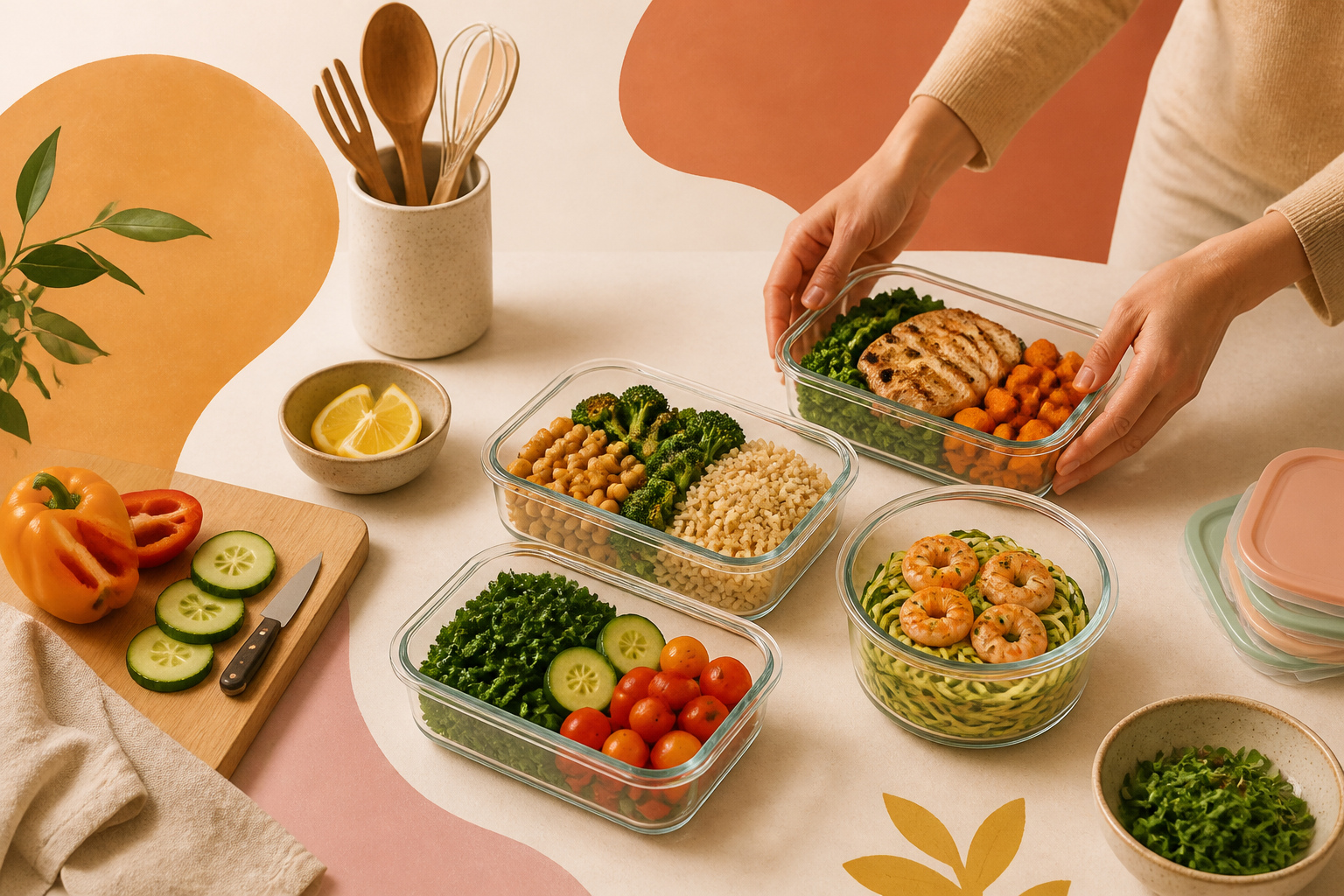
To start meal prepping, choose one meal type—such as lunch—and prepare three days' worth of portions in advance. You will need leak-proof containers, a basic grocery list, and roughly two hours of dedicated kitchen time. This approach reduces decision fatigue, lowers your weekly food spend, and ensures you eat balanced portions consistently.
What are the different ways to meal prep?
Meal prepping is not a single method but a range of strategies including batch cooking, buffet-style prep, and pre-portioned meals. Most beginners find success by starting with one specific meal that usually causes them stress during the working week.
Batch cooking involves making a large pot of a single recipe, like a chilli or stew, and dividing it into individual servings. This is the most time-efficient method because it uses fewer pots and pans. Buffet-style prep involves cooking individual components, such as a tray of roasted vegetables, a pot of grains, and two types of protein. You then mix and match these elements throughout the week to avoid eating the same meal every day. Finally, pre-portioned meals are fully assembled dishes ready to be heated and eaten, which is ideal for those with very busy schedules.
Research suggests that people who plan their meals are 13% more likely to have a high-quality diet. By removing the need to choose what to eat when you are already hungry, you are less likely to rely on convenience foods. In the UK, the average person spends over £1,500 a year on takeaway meals; meal prepping can significantly reduce this figure by utilising bulk-bought ingredients.
How do I choose the right equipment for meal prepping?
You should choose containers that are airtight, microwave-safe, and uniform in size to make fridge storage easier. Glass containers are often preferred because they do not stain or retain odours from strong spices, though BPA-free plastic is a lighter, more affordable alternative for commuting.
Before you buy a 20-piece set of containers, check your fridge and freezer space. If you have a small freezer, you may prefer stackable silicone bags which take up less room than rigid boxes. You will also need a sharp chef's knife, at least two large baking trays, and a digital kitchen scale if you are tracking specific macronutrients. Investing in a slow cooker or a pressure cooker can also automate much of the work, allowing you to cook tough cuts of meat or dried pulses while you do other tasks.
| Container Type | Best For | Average Cost (Set of 5) | Pros/Cons |
|---|---|---|---|
| Glass (Borosilicate) | Reheating in oven/microwave | £25 – £35 | Durable and clean; heavy to carry |
| BPA-Free Plastic | Cold salads and transport | £10 – £15 | Lightweight; can warp over time |
| Stainless Steel | Dry snacks and cold items | £30 – £45 | Indestructible; cannot go in microwave |
| Silicone Bags | Freezer storage | £15 – £25 | Space-saving; harder to clean thoroughly |
How do I plan a meal prep menu?
To plan a menu, select recipes that share similar ingredients to reduce waste and keep your grocery bill low. A successful meal prep plan usually centres around one or two proteins, two types of vegetables, and a versatile grain or starch.
When you first start meal prepping, avoid overly complex recipes with more than 10 ingredients. Stick to "forgiving" foods that taste good when reheated. Most people find that stews, curries, and roasted root vegetables hold their texture better than delicate greens or fried foods. If you are preparing salads, keep the dressing in a separate small container to prevent the leaves from becoming soggy by the second day.
Consider the following "formula" for a balanced prepped meal:
What is a realistic meal prep schedule?
A realistic schedule involves shopping on a Saturday and cooking on a Sunday afternoon for approximately two hours. Attempting to shop and cook on the same day often leads to fatigue and unfinished prep.
Break your session into phases: washing and chopping, active cooking (stovetop), passive cooking (oven), and assembly. While the vegetables are roasting for 30 minutes, you can simmer your grains and portion out snacks like nuts or fruit. This multi-tasking approach is the key to finishing quickly. Most cooked meals stay fresh in the fridge for 3 to 4 days. If you are prepping for a full Monday-to-Friday work week, plan to freeze the portions for Thursday and Friday, or do a "mini-prep" on Wednesday evening.
You can find further guidance on managing your routines in our personal development section. For those focusing specifically on the nutritional side of food, our health and wellness category offers more depth on balanced eating habits.
How can I keep meal prepping affordable?
You can keep meal prepping affordable by buying seasonal produce, choosing plant-based proteins twice a week, and shopping the "middle aisles" for bulk staples. Grains like rice and oats are significantly cheaper when bought in 1kg or 2kg bags rather than small convenience packets.
Frozen vegetables are an excellent hack for meal preppers. They are often frozen within hours of being picked, retaining their nutritional value, and they are usually 30% to 50% cheaper than fresh alternatives. Using tinned beans or chickpeas can also bulk out a meat-based dish, doubling the number of portions for a fraction of the cost. For more tips on managing your budget while improving your lifestyle, visit our personal wealth management resources.
It is also helpful to maintain a "pantry inventory" so you do not buy duplicate spices or grains. Small savings on staples add up over a year. If you find you are throwing away food at the end of the week, reduce your prep to just two days until you find the right portion sizes for your appetite. Accuracy in portioning helps both your health and your wallet.
If you are looking for more ways to simplify your daily routine, our life hacks section contains various strategies for efficiency. You can also browse our blog for regular updates on practical life skills.
Frequently asked questions
How long does prepped food last in the fridge?
Most cooked meals containing meat, fish, or poultry will safely last for 3 to 4 days when stored in airtight containers at or below 5°C. Plant-based meals involving grains and legumes may last up to 5 days. Always use your senses to check for off-smells or changes in texture before eating.
Can I meal prep if I hate eating the same thing every day?
Yes, you should use the "component prep" or buffet-style method instead of batch cooking. By preparing different proteins and vegetables separately, you can combine them with different sauces or spices each day. For example, roasted chicken can be a salad topper on Monday and a wrap filling on Tuesday.
Is it safe to reheat rice?
Reheating rice is safe as long as it is cooled quickly after cooking and stored in the fridge. You should only reheat rice once and ensure it is steaming hot all the way through. To prevent it from drying out, add a teaspoon of water before microwaving and cover the container.
Do I need to track calories when meal prepping?
Tracking calories is optional and depends on your personal health goals. Many people use meal prepping simply to ensure they eat more vegetables and spend less money. If you do wish to track, weighing your ingredients during the assembly phase is the most accurate way to calculate the nutritional value of each portion.