
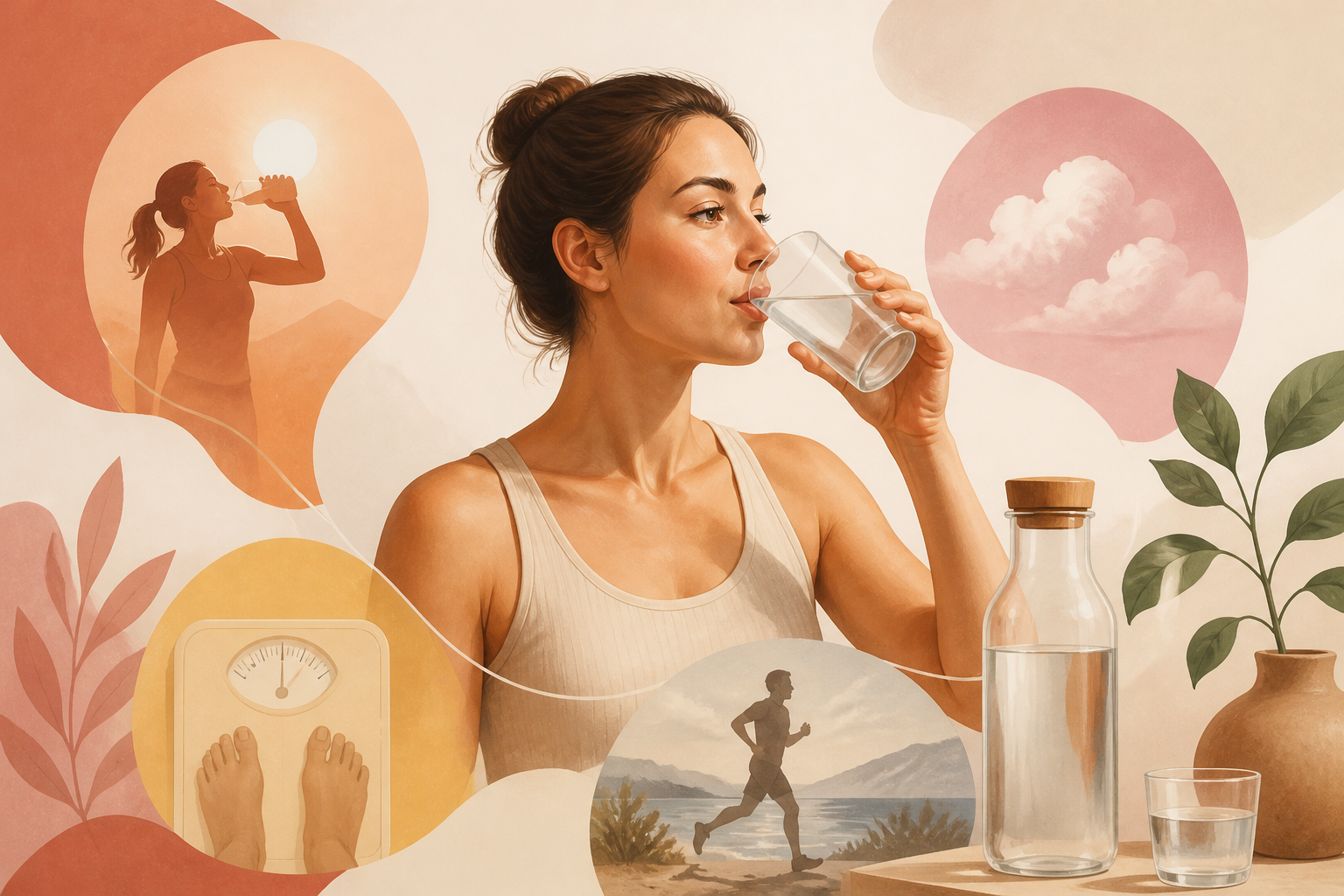
Most healthy adults need between 2 and 3 litres of fluid per day to maintain proper hydration. This amount includes all drinks such as water, tea, and coffee, as well as the moisture found in food. Your specific requirement depends on your body weight, physical activity levels, and the temperature of your environment.
How do I calculate my personal daily water needs?
To calculate your baseline water intake, you should aim for approximately 30 to 35 millilitres of fluid per kilogram of body weight. For a person weighing 70kg, this equates to roughly 2.1 to 2.45 litres of total fluid per day. If you are very active or live in a hot climate, you will need to increase this amount to replace fluids lost through sweat.
The "eight glasses a day" rule is a helpful starting point but lacks nuance. It does not account for the fact that a 50kg office worker has different physiological needs than a 90kg manual labourer. Furthermore, about 20% of our daily water intake typically comes from food, particularly fruits and vegetables like cucumber, watermelon, and spinach. The remaining 80% must come from beverages. While plain water is the most efficient choice, other drinks contribute to your total, though drinks high in sugar or salt may have other health and wellness implications.
Is it possible to drink too much water?
Yes, drinking excessive amounts of water in a short period can lead to a dangerous condition called hyponatremia. This occurs when the sodium levels in your blood become dangerously low because they have been diluted by too much fluid. The kidneys of a healthy adult can process about 20 to 28 litres of water per day, but they can only excrete about 0.8 to 1.0 litres per hour.
To avoid overhydration, it is better to sip water consistently throughout the day rather than "chugging" large volumes at once. Athletes or those performing intense physical labour for over 60 minutes should consider drinks with electrolytes to maintain salt balance. For the average person, thirst is a reliable mechanism. If you feel thirsty, your body is already slightly dehydrated, so you should drink water until the sensation passes.
Hydration requirements by weight and activity
The following table provides a conservative estimate of daily fluid requirements. These figures represent total fluid intake, including water from food and non-water beverages.
| Body Weight (kg) | Baseline Daily Fluid (Litres) | With 1 Hour Exercise (Litres) |
|---|---|---|
| 50kg | 1.5 - 1.7 | 2.0 - 2.2 |
| 60kg | 1.8 - 2.1 | 2.3 - 2.6 |
| 70kg | 2.1 - 2.4 | 2.6 - 3.0 |
| 80kg | 2.4 - 2.8 | 3.0 - 3.4 |
| 90kg+ | 2.7 - 3.2 | 3.3 - 4.0 |
What are the signs of mild dehydration?
Common signs of mild dehydration include dark yellow urine, a dry mouth, tiredness, and headaches. If your urine is a pale straw colour, you are likely well-hydrated. If it is the colour of apple juice or darker, you should increase your fluid intake immediately. Tracking these signals is a practical part of personal development and self-care.
Many people mistake thirst for hunger. If you feel a sudden craving for a snack shortly after a meal, try drinking a glass of water first. It takes about 20 minutes for the brain to register the fluid. Staying hydrated also helps with cognitive function; even a 2% drop in body water can lead to a noticeable decline in concentration and short-term memory.
How can I build a better hydration habit?
Building a habit requires removing friction and using cues. You do not need to "master" hydration overnight; small, consistent changes are more effective. You can find more tips on habit formation in our how to section. Consider the following steps to increase your intake naturally:
- Keep a reusable bottle on your desk or in your bag at all times.
- Drink a small glass of water immediately after waking up to replenish losses from sleep.
- Eat more water-rich foods like oranges, berries, and salads.
- Use a straw, which often encourages people to drink more without conscious effort.
- Flavour your water with slices of lemon, cucumber, or mint if you find plain water unappealing.
It is also worth noting that caffeine does not "cancel out" your water intake. While caffeine is a mild diuretic, the water contained in a cup of tea or coffee still contributes more fluid to your body than is lost through increased urination. You can read more about managing daily routines in our life hacks guide.
Does age affect how much water I need?
Yes, the sensation of thirst often diminishes as people get older. This means older adults may not feel thirsty even when their body requires fluids. Furthermore, the total water content in the body decreases with age, from about 60% in younger adults to roughly 50% in those over 65. For older individuals, it is vital to drink on a schedule rather than waiting for the sensation of thirst.
Children also have specific needs. Because they have a larger surface area relative to their body mass, they lose water through their skin more quickly than adults do. Parents should ensure children drink regularly, especially during play or in warm weather. For more advice on managing family health, visit our life skills Q&A page.
Frequently asked questions
Does coffee count towards my daily water goal?
Yes, caffeinated drinks like tea and coffee contribute to your total fluid intake. While caffeine has a mild diuretic effect, the liquid in the drink outweighs the fluid lost. However, it is still best to rely on plain water for the majority of your hydration to avoid excessive caffeine or sugar.
What colour should my urine be?
Ideally, your urine should be a pale yellow or "straw" colour. Very clear urine may suggest you are drinking more than necessary, while dark yellow or amber urine is a clear sign that you are dehydrated and need to drink more fluid immediately.
Should I drink water before, during, or after meals?
There is no evidence that drinking water during meals interferes with digestion or dilutes stomach acid significantly. Drinking a glass of water before a meal may help with weight management by increasing the feeling of fullness. The most important factor is meeting your total daily fluid target regardless of timing.
How much extra water do I need when exercising?
For every 30 minutes of moderate exercise, you should aim to drink an additional 250ml to 500ml of water. If you are exercising intensely for over an hour, or in high heat, you may need even more, along with electrolytes to replace lost sodium and potassium.