
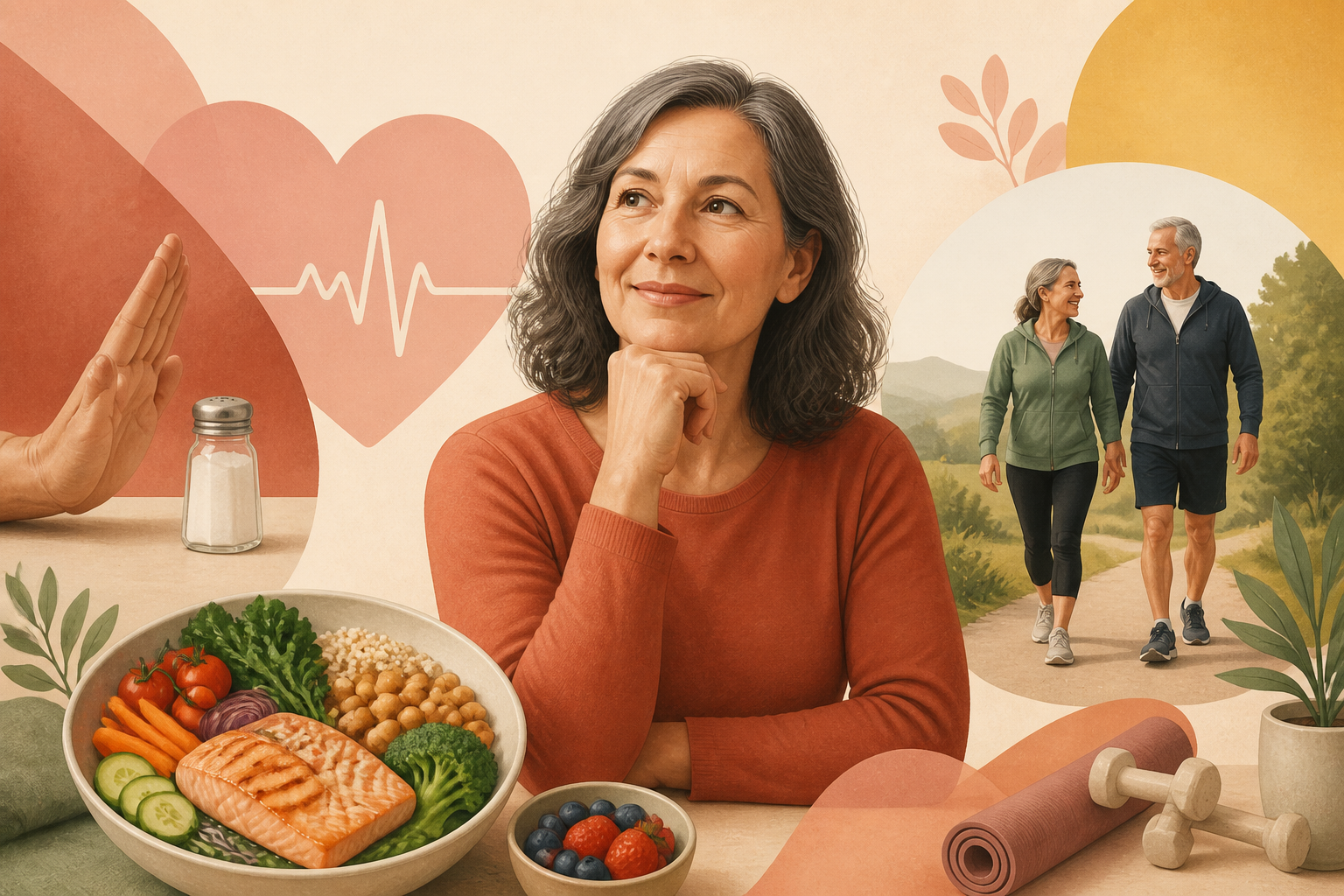
You can lower blood pressure naturally by reducing salt intake to less than 6g per day, increasing potassium-rich foods, and engaging in 150 minutes of moderate aerobic exercise weekly. Weight management and limiting alcohol to 14 units per week also significantly reduce pressure on your arteries, often lowering systolic readings by 5 to 10 mmHg.
What foods help lower blood pressure naturally?
Foods rich in potassium, magnesium, and calcium help the walls of your blood vessels relax and encourage the kidneys to excrete excess sodium. The most effective eating plan for this purpose is the DASH diet (Dietary Approaches to Stop Hypertension), which emphasises vegetables, fruits, and low-fat dairy.
A balanced diet focuses on whole foods rather than processed items. Processed foods often contain hidden salts and preservatives that cause the body to retain water, increasing the volume of blood and the pressure within your veins. By shifting your focus to the following food groups, you can create a sustainable environment for heart health.
- Leafy greens: Spinach, kale, and swiss chard are high in potassium, which helps your kidneys get rid of sodium through urine.
- Berries: Blueberries and strawberries contain antioxidant compounds called flavonoids, which may reduce hypertension.
- Oats: High-fibre, low-sodium cereals like porridge help maintain a healthy weight and improve arterial function.
- Oily fish: Salmon and mackerel are rich in omega-3 fatty acids, which lower inflammation and reduce oxitidative stress.
- Beetroot: This vegetable is high in nitric oxide, which helps open blood vessels and improve blood flow.
How much salt should I eat to see a difference?
To see a significant reduction in blood pressure, you should aim for no more than 6g of salt per day, which is roughly one level teaspoon. Most adults in the UK currently consume about 8.1g per day, meaning a 25% reduction is necessary for most people to meet health guidelines.
Salt, or sodium chloride, is the primary dietary cause of high blood pressure. When you eat too much salt, your body holds onto extra water to wash the salt out. This extra water increases your total blood volume, which means your heart has to work harder to pump it around your body. Over time, this extra strain stiffens the blood vessels, leading to permanently high readings.
The table below shows common high-salt foods and lower-salt alternatives that can help you reach the 6g target.
| High-Salt Food | Typical Salt Content | Healthier Alternative |
|---|---|---|
| Stock cubes (1 cube) | approx. 5g | Reduced-salt stock or fresh herbs |
| Soy sauce (1 tbsp) | approx. 2.3g | Balsamic vinegar or lemon juice |
| Ready-made pizza | 5g to 8g | Home-made pizza with fresh dough |
| Bacon (2 rashers) | approx. 1.5g | Unprocessed lean chicken or turkey |
| Canned soup (1 tin) | approx. 2g | Home-made vegetable soup |
Why does physical activity impact blood pressure?
Physical activity strengthens the heart muscle, allowing it to pump more blood with less effort, which reduces the force on your arteries. Regular exercise can lower your systolic blood pressure by an average of 4 to 9 mmHg, a result comparable to some blood pressure medications.
You do not need to run marathons to see these benefits. Consistency is more important than intensity. The goal for most adults is 150 minutes of moderate-intensity activity per week. This can be broken down into 30-minute sessions, five days a week. Moderate intensity means you are moving fast enough to raise your heart rate and breathe harder, but you can still hold a conversation.
Effective activities include brisk walking, swimming, cycling, or even heavy gardening. Strength training is also beneficial and should be included at least two days a week. When you build muscle, your body becomes more efficient at using oxygen and glucose, which supports overall cardiovascular health. You can find more tips on building these routines in our health and wellness section.
Can lifestyle habits reduce the need for medication?
While many people require medication to manage hypertension, lifestyle changes are the foundation of any treatment plan and can sometimes reduce the dosage required. Reducing alcohol consumption and quitting smoking are two of the most impactful changes a person can make alongside diet and exercise.
Alcohol can raise blood pressure to unhealthy levels if consumed in excess. If you drink more than the recommended 14 units a week, your risk of developing chronic hypertension increases significantly. Furthermore, alcohol is high in calories, which can lead to weight gain—another major risk factor for high blood pressure. Weight loss is one of the most effective ways to lower your numbers; for every kilogram you lose, your blood pressure can drop by approximately 1 mmHg.
Smoking does not cause long-term high blood pressure on its own, but every cigarette causes a temporary, sharp rise in your heart rate and blood pressure. More importantly, the chemicals in tobacco damage the lining of your artery walls. This causes your arteries to narrow and increases the risk of heart disease. Combining smoking with high blood pressure significantly raises the risk of stroke or heart attack.
Managing stress is another crucial factor. Chronic stress keeps your body in a "fight or flight" mode, which increases your heart rate and constricts blood vessels. Techniques such as deep breathing, meditation, or simply ensuring you get enough sleep can help. For more advice on managing daily stress, visit our personal development guides.
How do I track my progress at home?
To lower blood pressure naturally, you must know your starting numbers and monitor how they change over time. Using a home blood pressure monitor allows you to take readings in a relaxed environment, which is often more accurate than a single reading taken in a stressful doctor's surgery.
When measuring at home, follow these steps for accuracy:
- Avoid caffeine, smoking, or exercise for 30 minutes before the test.
- Sit quietly for five minutes with your back supported and feet flat on the floor.
- Ensure the cuff is the correct size for your arm and placed directly on the skin.
- Take two or three readings, about one minute apart, and record the average.
- Keep a log of your readings to share with your GP or pharmacist.
Consistency in measurement helps you see the direct impact of your lifestyle changes. You might notice your pressure drops after a week of low-salt eating or after a period of regular walking. Understanding these patterns is a key part of personal wealth management in terms of your health as an asset. Long-term health prevents the costs associated with chronic illness and improves your quality of life.
Frequently asked questions
Is high blood pressure always symptomatic?
No, high blood pressure is often called a silent killer because it rarely causes obvious symptoms. Many people do not know they have it until they have a routine check or suffer a serious complication. This is why regular monitoring is essential for adults over the age of 40.
How long does it take to lower blood pressure naturally?
You may see improvements in your readings in as little as one to three weeks after reducing salt and improving your diet. However, for these changes to be permanent and significantly impact your heart health, the habits must be maintained for several months. Consistency is the most important factor in natural management.
Does caffeine increase blood pressure?
Caffeine can cause a short-term, temporary spike in blood pressure even in people who do not have hypertension. The long-term effects of caffeine on blood pressure are less clear, but if you are sensitive to it, you may want to limit your intake. Most health professionals suggest monitoring your pressure before and after a cup of coffee to see how you personally react.
Can drinking more water lower blood pressure?
Staying hydrated helps your body regulate sodium levels, which can prevent blood pressure from rising. Dehydration can cause the body to constrict blood vessels and hold onto sodium, which increases pressure. While water is not a "cure" for hypertension, it is a necessary component of a healthy cardiovascular system.