
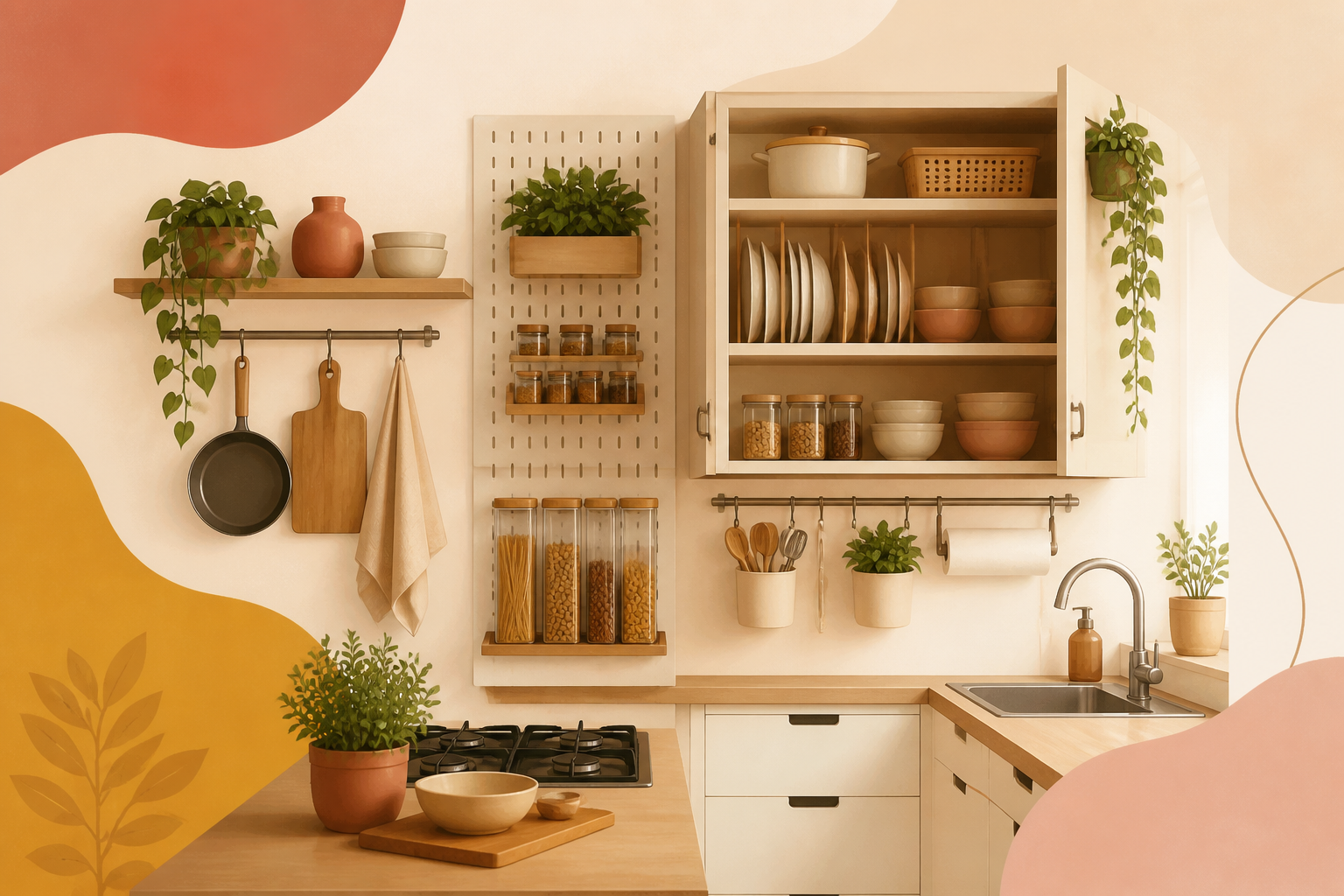
To organise a small kitchen effectively, you must categorise items by frequency of use, utilise vertical wall space with rails or magnetic strips, and implement a zone-based layout. By clearing worktops of non-essential items and using stackable containers, you can increase usable prep space by up to 40% without structural changes.
How do you start decluttering a small kitchen?
You start decluttering by removing every item from your cupboards and sorting them into three categories: daily use, occasional use, and redundant. Research suggests the average UK household owns roughly 20 to 30 kitchen gadgets, yet many people only use five of them regularly. Discarding chipped crockery, expired pantry goods, and duplicate utensils is the fastest way to reclaim space.
Before you buy new storage bins or organisers, you need a clear view of the empty space. Measure the height, width, and depth of your cabinets. In small kitchens, every 5cm matters. Most standard UK kitchen wall units are 300mm deep, while base units are 600mm deep. Knowing these dimensions helps you choose containers that sit flush against the back wall, preventing wasted gaps.
Once you have sorted your items, follow these steps to rebuild the space:
- Discard duplicates: You rarely need three spatulas or two sets of measuring jugs.
- Check expiry dates: Spices older than two years lose their potency; dried pasta and grains often have a shelf life of 12 to 24 months.
- Evaluate appliances: If you have not used a sandwich toaster or juicer in the last six months, store it in a high cupboard or consider selling it.
- Standardise containers: Square or rectangular containers stack better than round ones, saving roughly 25% more shelf space.
What are the best storage solutions for limited cabinet space?
The best storage solutions for limited cabinets involve creating "layers" within shelves using risers and pull-out organisers. These tools allow you to access the full depth of a cupboard without having to remove items at the front to reach the back. Vertical dividers are also highly effective for storing flat items like baking trays and chopping boards, which often become cluttered when stacked horizontally.
Maximising a small kitchen is often about looking up rather than out. Walls, the sides of cabinets, and even the ceiling can provide storage opportunities that do not clutter the floor or worktops. Consider the following comparison of common storage hacks for life hacks in the home:
| Storage Tool | Primary Benefit | Best For |
|---|---|---|
| Magnetic Knife Strip | Clears counter space | Chef knives, scissors, metal utensils |
| Shelf Risers | Doubles vertical shelf space | Mugs, small plates, canned goods |
| Over-door Racks | Uses hidden space | Cleaning supplies, foil, cling film |
| Pegboards | Customisable wall storage | Frying pans, colanders, sieves |
| Tiered Spice Racks | Increases visibility | Small jars, seasoning tins |
When you use shelf risers, you solve the problem of "dead air" in tall cupboards. If a shelf is 40cm high but you only store a single layer of tinned beans, you are wasting 20cm of space. A wire riser allows you to place a second layer of items above the first, effectively doubling your storage capacity for that specific footprint.
Create functional zones for daily tasks
A functional kitchen is divided into zones based on the activities performed there: prep, cooking, cleaning, and storage. In a small kitchen, these zones may overlap, but the tools required for each should remain grouped together. This reduces the time spent moving across the room and keeps the workflow logical.
The Prep Zone should be near your main worktop and include knives, chopping boards, and mixing bowls. The Cooking Zone centres around the hob and oven, containing pots, pans, oils, and spices. The Cleaning Zone is situated around the sink and dishwasher, housing detergents, sponges, and bin liners. Finally, the Storage Zone includes the fridge and pantry cupboards for food items.
To refine your personal development in home management, focus on these five steps to zone a small kitchen:
- Map the triangle: The distance between your fridge, sink, and hob should be unobstructed.
- Store by weight: Heavy cast iron pans should live in base units, while lighter plastic containers go in wall units.
- Use the "Golden Zone": The space between your waist and eye level is the most accessible; place your most-used items here.
- Group by task: Keep coffee pods, sugar, and mugs near the kettle to create a dedicated beverage station.
- Label everything: In a tight pantry, clear labels help you find ingredients quickly and prevent you from buying duplicates.
For more advice on managing your home environment efficiently, you may find our wealth knowledge base helpful for understanding how home efficiency impacts your overall household budget. Investing in a few quality organisers now can prevent food waste by making your inventory visible.
How can you keep worktops clear in a tiny kitchen?
You can keep worktops clear by adopting a "one-in, one-out" rule for appliances and using wall-mounted rails for frequently used utensils. Every item kept on the counter should be used at least once every 24 hours; if it is used less often, it belongs in a drawer or cupboard. Clearing the worktops creates a sense of calm and provides the physical space needed for safe food preparation.
Think of your worktop as "prime real estate". If you have a toaster, a stand mixer, a coffee machine, and a fruit bowl on the counter, you might only have 30cm of space left to chop vegetables. By moving the stand mixer to a lower cabinet and hanging the fruit in a wire basket under a wall unit, you reclaim significant prep area. Many professionals suggest that 60% to 70% of your worktop surface should be clear at all times to maintain a functional cooking environment.
Maintaining these systems is just as important as setting them up. Spend five minutes each evening resetting your zones. Put dry dishes away, wipe down the clear surfaces, and ensure no items have migrated from their designated spots. Over time, these small actions become habits that prevent the kitchen from feeling cramped or overwhelming.
If you are looking for more ways to optimise your daily routines, check our how-to section for practical guides on home and time management. Small changes in how you handle physical objects often lead to greater mental clarity and less stress during busy weekdays.
Frequently asked questions
Where should I store heavy pots and pans in a small kitchen?
Heavy items should always be stored in lower base cabinets to ensure safety and ease of access. Use pull-out drawers if possible, or install a sturdy wire organiser to stack pans vertically. This prevents you from having to lift heavy weights above your head, which is a common cause of kitchen accidents.
Is it worth buying a kitchen trolley for extra space?
A kitchen trolley is an excellent investment if you have at least 60cm of floor space to spare. It provides an additional work surface and two or three extra shelves of storage. Choose a model with lockable wheels so you can move it out of the way when it is not in use.
How do I organise a very narrow "pull-out" larder?
Organise a narrow larder by placing taller bottles at the bottom to maintain stability and smaller jars at the top for better visibility. Use acrylic bins to group similar items, like baking supplies or snacks, so you can pull out the entire bin rather than individual packets. This prevents small items from falling behind the shelves and getting lost.