
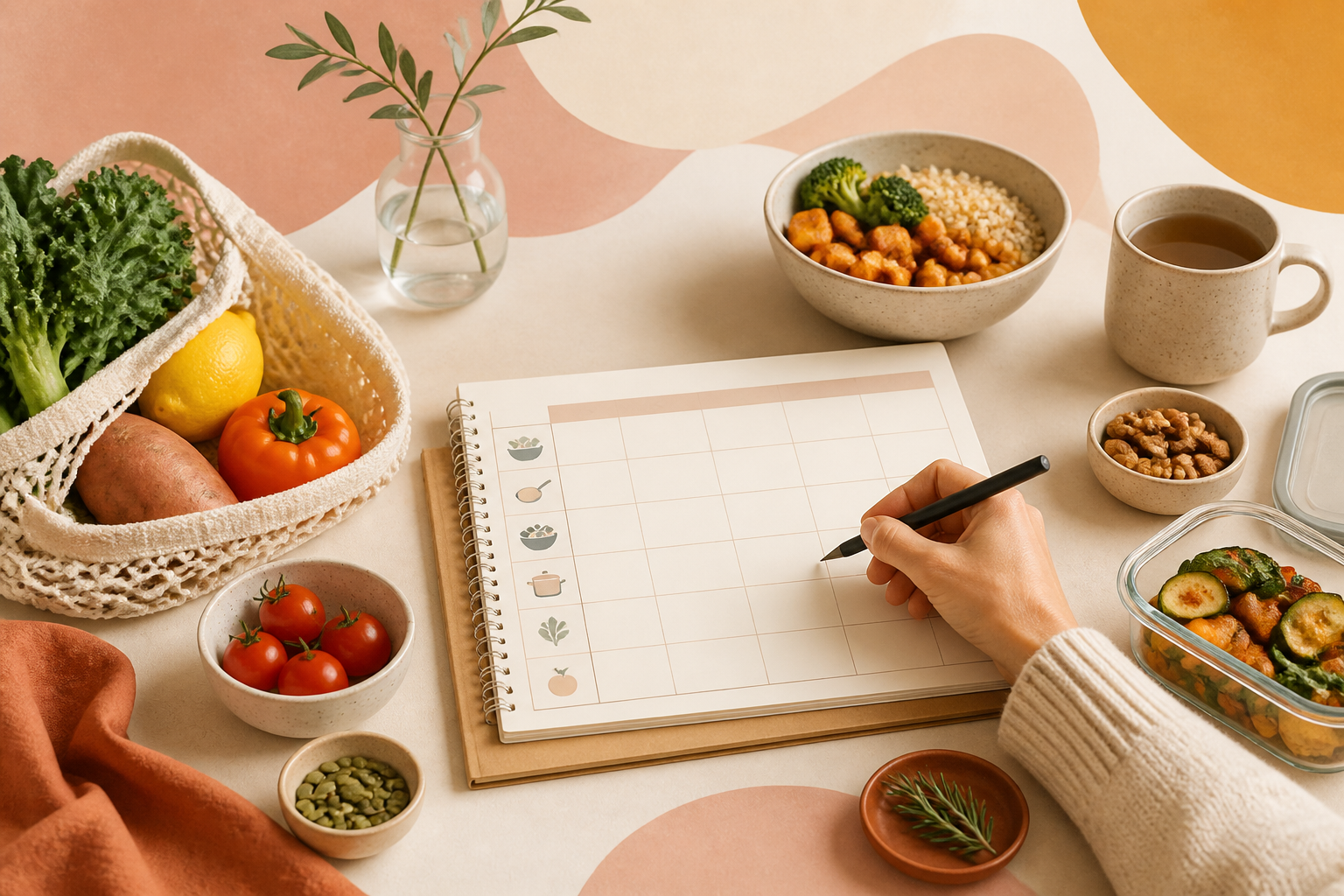
To meal plan effectively, you must audit your existing cupboards, choose meals based on overlapping ingredients, and create a specific shopping list. This process helps reduce decision fatigue, lowers your weekly grocery spend by 15% to 25%, and ensures you use the food you buy before it expires.
Most people fail at meal planning because they try to be too ambitious. They choose five new recipes that require twenty different ingredients. This leads to burnout and a fridge full of half-used jars. A better approach is to rely on a small rotation of familiar meals and one or two flexible "buffer" nights. By keeping the process simple, you are more likely to stick to the habit for more than a week.
How do you start meal planning without feeling overwhelmed?
You start by checking what you already own and planning only three days ahead rather than a full seven. Look in your freezer and the back of your pantry to find base ingredients like pasta, rice, or frozen vegetables that can form the core of a meal. Once you have a handle on three days, you can gradually extend your plan to cover the full week.
Consistency is more important than variety. If your Tuesdays are always busy with work or hobbies, Tuesday should always be a "15-minute meal" night. This predictability removes the mental burden of choosing what to eat when you are tired. You do not need a gourmet menu; you need a reliable system that fits your actual schedule.
Step 1: The kitchen audit
Before you look at a recipe book or a supermarket app, look in your kitchen. Many households throw away up to 30% of the food they buy. An audit prevents you from buying a second bag of flour when you already have one tucked away. Focus on three areas:
- The freezer: Check for proteins, frozen fruit, and leftovers.
- The pantry: Look for grains, beans, tinned tomatoes, and spices.
- The fridge: Identify perishables like milk or greens that need using immediately.
Step 2: Choose your "Anchor" meals
Select three meals you know how to cook by heart. These are your anchors. They should use similar base ingredients to keep your shopping list short. For example, if you buy a large bag of spinach, plan a pasta dish and a curry that both use spinach. This reduces waste and ensures you get the best value from your fresh produce.
| Meal Type | Preparation Time | Typical Cost per Serving | Difficulty |
|---|---|---|---|
| Batch-cooked Stew/Chilli | 45–60 mins | £1.20 – £1.80 | Low |
| Stir-fry or Pasta | 15–20 mins | £1.50 – £2.50 | Low |
| Roast Meat/Vegetables | 60–90 mins | £2.00 – £3.50 | Medium |
| "Pantry" Salad or Omelette | 10 mins | £0.80 – £1.50 | Very Low |
Why is a shopping list essential for meal planning?
A shopping list acts as a contract with yourself to avoid impulse buys and stay within your budget. It organises your trip so you spend less time in the aisles, which reduces the likelihood of picking up snacks or promotional items you do not need. Research suggests that shoppers with a list spend up to 20% less than those who browse the shelves for inspiration.
When writing your list, organise it by the layout of your local shop. Group your vegetables together, then proteins, then dairy. This prevents you from criss-crossing the store, which saves time and energy. If you shop online, use the list to search for specific items rather than browsing the "offers" page, which is designed to encourage extra spending.
Step 3: Account for leftovers and "buffer" nights
Do not plan seven unique dinners for seven nights. Most people find that a "Cook 4, Eat 7" strategy works best. This means you cook four times a week and rely on leftovers or simple "pantry meals" for the remaining three nights. This accounts for unexpected late finishes at work or social invitations that might otherwise ruin a rigid plan.
Leftovers are specifically useful for lunches. If you cook a large portion of curry on Sunday, you have a high-quality lunch ready for Monday and Tuesday. This can save an individual between £30 and £50 a month compared to buying sandwiches or salads from a café every day. You can find more tips on managing your daily costs in our personal wealth management section.
Step 4: Prep only what is necessary
You do not have to spend all of Sunday afternoon in the kitchen. "Meal prep" can be as simple as chopping three onions at once or boiling a pot of rice to keep in the fridge. Small actions taken when you have energy make the weekday evenings much smoother. Focus on the tasks that take the most time or create the most mess during the week.
If you prefer fresh food, only prep the ingredients, not the whole meal. Chopping vegetables or marinating meat takes 10 minutes but saves 20 minutes during the dinner rush. This approach is a core part of developing better life hacks for a calmer home environment. When the "hard" work is already done, you are less likely to order a takeaway.
Step 5: Review and adjust
At the end of the week, look at what you didn't eat. If you find yourself constantly tossing out bags of salad, stop buying them in bulk. If a certain meal was too stressful to cook on a Wednesday, move it to the weekend or remove it from your rotation. Meal planning is a skill that improves with practice and self-observation.
Over time, you will build a digital or physical "bank" of recipes that your household enjoys and that fit your budget. This reduces the time spent planning from 30 minutes down to five minutes. You can read more about building these long-term habits in our personal development guides.
Frequently asked questions
Is meal planning more expensive than buying food as I go?
No, meal planning is almost always cheaper. When you buy food as you go, you tend to purchase smaller packs which have a higher unit price and you often buy duplicate ingredients. By planning, you can buy in bulk and ensure every item you purchase is actually consumed.
How do I meal plan for a family with different tastes?
The easiest way is to use a "build-your-own" approach for at least two meals a week. Items like tacos, jacket potatoes, or grain bowls allow everyone to choose their own toppings while using the same base ingredients. This satisfies different preferences without requiring you to cook multiple separate meals.
What if I don't feel like eating what I planned?
This is why flexibility is vital. Always keep a "pantry meal" available, such as beans on toast or a simple pasta with oil and garlic. If you really don't want the planned meal, swap it for the pantry meal and move the original plan to the next day. A plan should be a guide, not a source of guilt.
Should I use an app or a paper list?
Both methods work, but they serve different people. A paper list is excellent for visibility on the fridge, while an app is useful because you always have it with you at the shop. The best tool is whichever one you find easiest to update the moment you run out of an ingredient.