
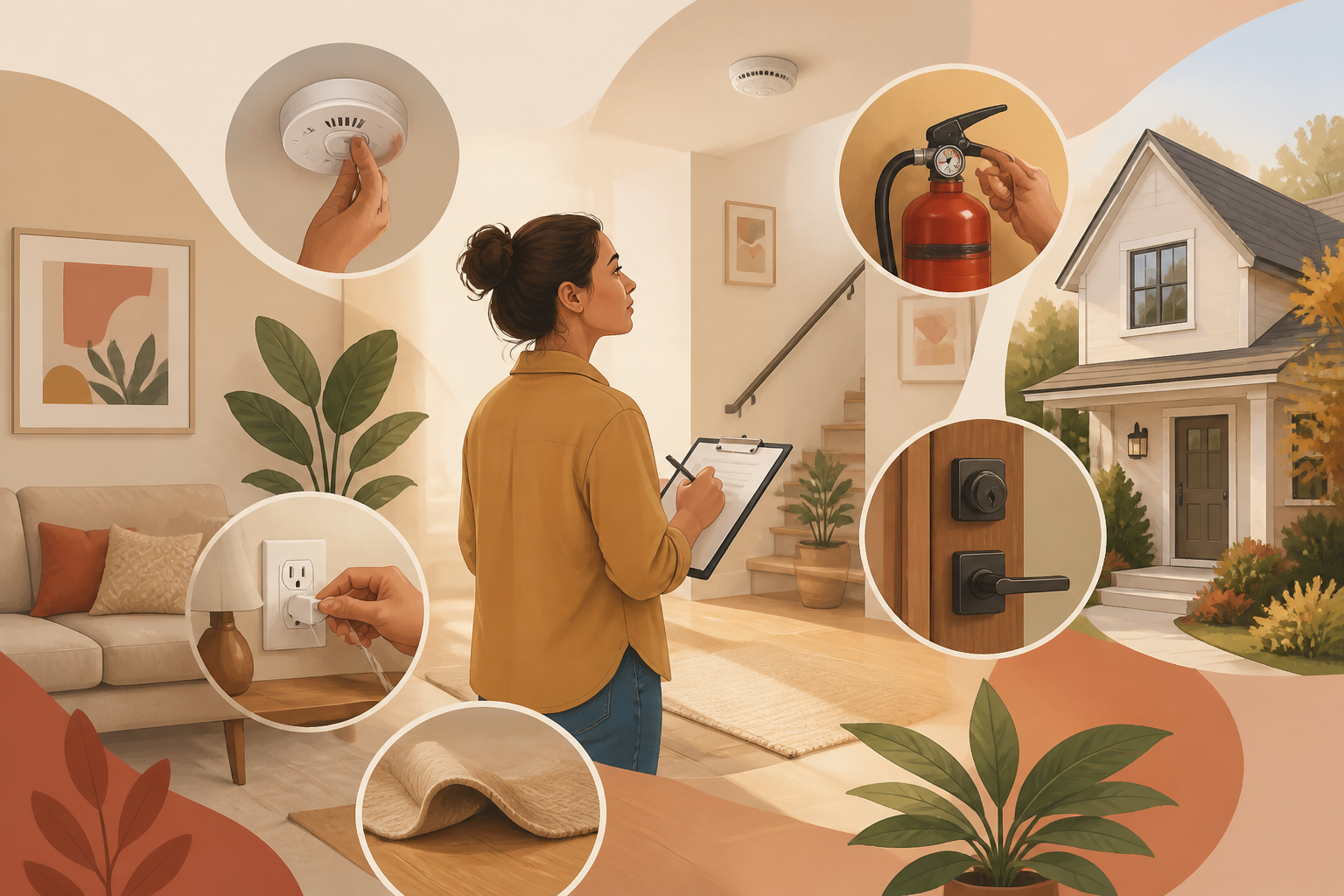
To carry out a home safety audit, you must systematically inspect every room for fire hazards, trip risks, electrical faults, and security vulnerabilities. This involves testing all smoke and carbon monoxide alarms, checking expiry dates on extinguishers, clearing exit paths, and ensuring all external entry points are structurally sound and properly locked.
Why should you perform a home safety audit?
You should perform a home safety audit to identify and mitigate risks that could lead to injury, fire, or theft. Most household accidents are preventable through regular inspection and maintenance of safety equipment. According to UK fire statistics, households with working smoke alarms are significantly more likely to escape a fire unharmed than those without. Regular audits ensure that these devices, along with locks and structural elements, remain in good working order despite daily wear and tear.
A thorough audit provides peace of mind. By taking two hours every six months to walk through your home with a checklist, you move from a reactive state to a proactive one. This process helps you spot small issues, such as a frayed kettle lead or a loose stair bannister, before they cause a significant problem. It is a fundamental part of responsible life hacks for long-term home management.
Step 1: Test and update your early warning systems
The most critical part of any audit is verifying your detection systems. Smoke alarms and carbon monoxide (CO) detectors are your first line of defence. In the UK, fire services recommend testing these weekly, but a full audit requires a deeper look than just pressing the button.
Check the manufacture date on the back of each unit. Most smoke alarms have a lifespan of 10 years, while CO detectors often last between 5 and 7 years. If a device is past its expiry date, the sensor may no longer be reliable even if the test beep sounds. Replace the batteries annually, or consider installing units with 10-year sealed lithium batteries to reduce maintenance. Ensure there is at least one smoke alarm on every level of the home and a CO detector in any room with a fuel-burning appliance, such as a boiler or wood burner.
Step 2: Inspect electrical outlets and appliances
Electrical fires account for a large portion of domestic incidents. Start by looking at your consumer unit (fuse box) to ensure there are no signs of scorching or a burning smell. Check that the RCD (Residual Current Device) trips correctly when tested.
Move through every room and inspect high-draw appliances like washing machines, dishwashers, and heaters. Look for frayed cables, cracked plugs, or discolouration around wall sockets. Avoid "daisy-chaining" extension leads, which involves plugging one extension lead into another. This can easily overload the circuit and create a fire risk. Ensure that cables are not run under carpets or rugs, as foot traffic can wear down the insulation over time, leading to a hidden fire hazard.
How do you identify hidden trip and fall hazards?
You identify trip and fall hazards by looking at floor transitions, lighting levels, and the stability of fixtures. Start by checking that all carpets are firmly tacked down and that area rugs have non-slip backing. In the bathroom, ensure that bath mats are secure and that there are no leaks causing slippery patches on the floor. Check the lighting in stairwells and hallways; if a bulb is dim or flickering, replace it immediately to ensure clear visibility at night.
The following table outlines common hazards and the recommended corrective actions:
| Area | Common Hazard | Corrective Action |
|---|---|---|
| Stairs | Loose handrails or items left on steps | Tighten brackets and keep stairs completely clear |
| Living Room | Trailing cables across walkways | Route cables along baseboards or use cable tidies |
| Kitchen | Spilled liquids or grease | Clean spills immediately and use non-slip flooring |
| Bedroom | Poor lighting between bed and door | Install motion-sensor nightlights or reachable lamps |
Step 3: Evaluate kitchen and fire safety equipment
The kitchen is the most common site for house fires. A safety audit should include a check of your fire blanket and extinguisher. Ensure the fire blanket is easily accessible and not stored directly above the cooker, as a stove fire might prevent you from reaching it. If you have a dry powder extinguisher, check the pressure gauge is in the green zone and shake it occasionally to prevent the powder from settling.
Check the hoods and filters above your hob. Accumulated grease is highly flammable. If you cannot remember the last time you cleaned or replaced the filter, do it during the audit. Also, verify that all flammable items, such as tea towels and wooden utensils, are kept at least 50cm away from the cooking surface.
Step 4: Secure the perimeter and entry points
Home safety also includes security against intruders. Inspect every window and door to ensure the locks operate smoothly. If a door has dropped on its hinges, the bolt might not be engaging fully with the strike plate, making it easier to force open. Lubricate stiff locks with a graphite-based spray rather than oil, which can attract dirt and cause clogs.
Check your outdoor lighting. Motion-activated lights are a strong deterrent. Ensure the sensors are clean and the bulbs are functioning. If you have a shed or garage, verify that these are secured with high-quality padlocks and that any tools that could be used to break into the main house, such as ladders or crowbars, are locked away. For more on managing your environment, see our guide on personal development through habit building.
Step 5: Review your emergency exit plan
Having safety equipment is only half the battle; you must also know how to exit the building quickly. During your audit, ensure that all exit routes are clear of clutter. Large boxes or furniture should not obstruct hallways or doors. If your windows have security locks, ensure every family member knows where the keys are kept. Ideally, keys should be kept in a consistent place near the window but out of reach from the outside.
Practise opening the main doors in the dark. In a fire, smoke can reduce visibility to near zero. Knowing the exact number of steps to the door and how to operate the deadbolt by touch can save vital seconds. If you have children, explain the plan to them simply, focusing on a "meeting point" outside, such as a specific tree or a neighbour’s gate.
Step 6: Assess water and gas safety
Locate your main water stopcock and the gas shut-off valve. During an audit, you should physically turn the water stopcock to ensure it hasn't seized up. It is common for these valves to become stuck over years of disuse, which can be disastrous during a burst pipe emergency. If it is stiff, apply a small amount of penetrating oil and gently work it back and forth.
Check under sinks and around the base of the toilet for slow leaks. Small damp patches can lead to mould growth, which affects air quality and long-term health. If you have a gas boiler, verify that it has been serviced by a registered engineer within the last 12 months. You can find more information on maintaining household systems in our life hacks section.
Summary checklist for your audit
- Test all smoke and carbon monoxide alarms and check expiry dates.
- Inspect all electrical cords for fraying and avoid overloaded sockets.
- Clear all hallways and stairs of clutter and trip hazards.
- Check that fire blankets and extinguishers are accessible and serviced.
- Verify that all window and door locks are fully functional.
- Locate and test the main water stopcock.
- Ensure outdoor lighting is working and sensors are clear.
Conducting these checks twice a year—perhaps when the clocks change—ensures that your home remains a safe environment. It requires no special tools, only an observant eye and a commitment to maintenance. For broader advice on managing your household and resources, visit our wealth knowledge base.
Frequently asked questions
How often should I replace my smoke alarms?
You should replace the entire smoke alarm unit every 10 years, as the sensors lose sensitivity over time. If the unit uses replaceable 9V batteries, these should be changed once a year. Always check the manufacture date printed on the back of the device during your audit.
What is the best way to clean a grease filter in the kitchen?
Most metal grease filters can be cleaned in a dishwasher on a high-temperature cycle or soaked in a sink with hot water and a heavy-duty degreasing dish soap. If you have a recirculating hood with a carbon filter, these cannot be cleaned and must be replaced every 3 to 6 months depending on how often you cook.
Do I really need a carbon monoxide detector if I don't have a gas boiler?
Yes, you still need a CO detector if you have any fuel-burning appliance, such as an open fire, a wood-burning stove, or an oil-fired heater. Carbon monoxide is a tasteless, odourless gas produced by the incomplete combustion of fuels, and it can be lethal without a functional alarm to detect it.
Should I keep my fire extinguisher in the kitchen?
You should keep a fire extinguisher near the kitchen, but not directly next to the stove. If a fire starts on the hob, heat and flames may prevent you from reaching an extinguisher placed too close. The best location is near the kitchen exit, allowing you to fight the fire while keeping a clear escape route behind you.