
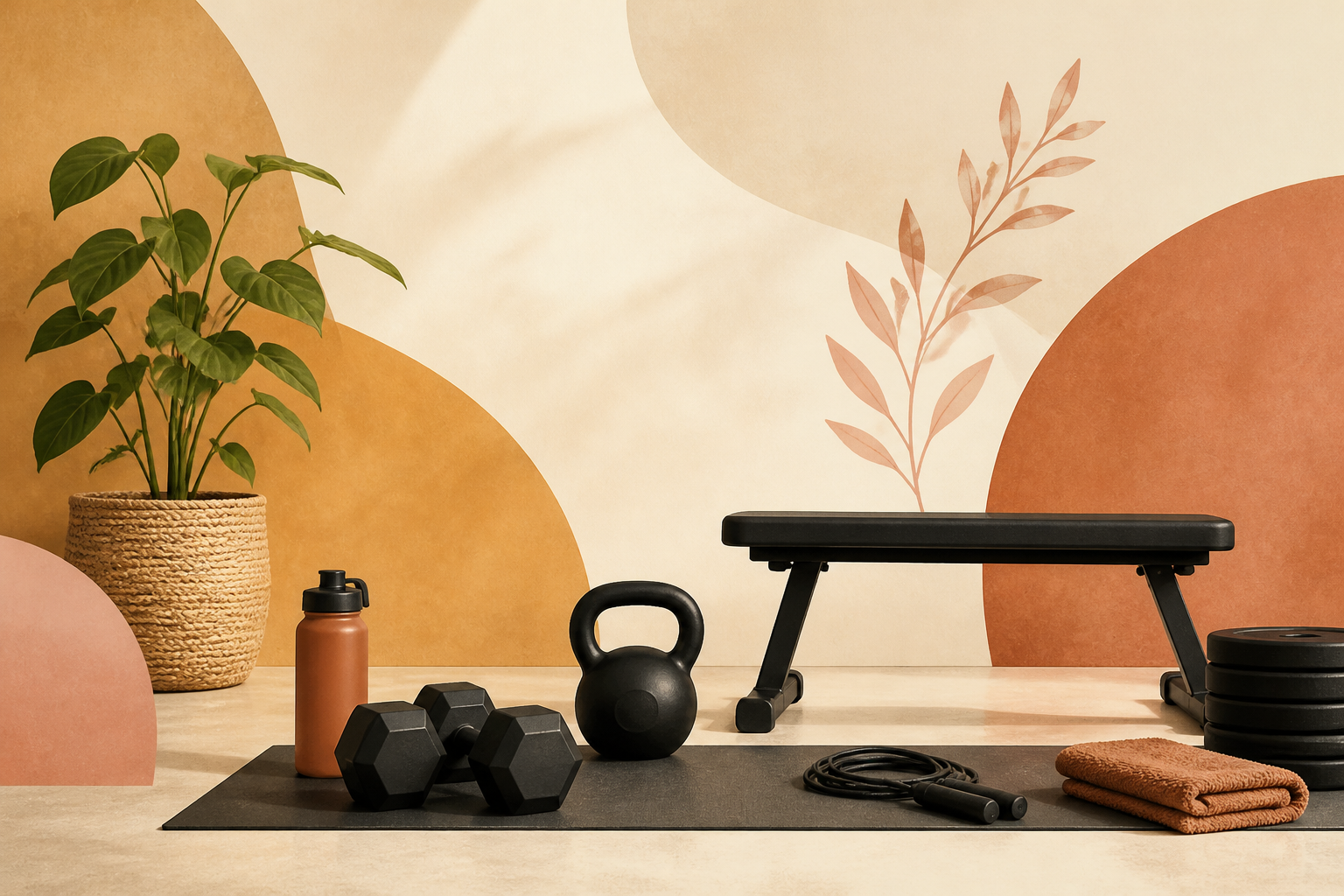
To build a home gym on a budget, focus on versatile, space-saving equipment like adjustable dumbbells, resistance bands, and a stable bench. You can create a highly functional setup for strength and cardio for between £100 and £300 by prioritising multi-purpose tools rather than large, single-use machines. Success relies on choosing gear that matches your specific fitness goals while fitting your available floor space.
Setting up a dedicated space for physical activity is one of the most effective ways to improve your long-term health and wellness. Many people assume they need a dedicated outbuilding or a four-figure budget to replicate a commercial gym experience. However, most physiological benefits come from consistent resistance and aerobic work, which can be achieved with minimal kit. This guide outlines the logical steps to selecting equipment, managing your budget, and organising your space.
How much does a basic home gym cost?
A basic home gym typically costs between £80 and £150 for a starter kit, or up to £500 for a comprehensive strength setup. By avoiding high-end brands and digital subscriptions, you can purchase all the essential tools for less than the cost of a six-month premium gym membership.
The cost varies significantly based on the type of exercise you prefer. Those focused on bodyweight movements and yoga will spend the least, while those wanting to lift heavy weights will need to invest more in floor protection and iron or steel plates. The following table provides a conservative estimate of costs for different tiers of equipment.
| Equipment Tier | Items Included | Estimated Cost |
|---|---|---|
| Minimalist | Resistance bands, yoga mat, skipping rope | £30 – £60 |
| Intermediate | Adjustable dumbbells, kettlebell, doorway pull-up bar | £120 – £220 |
| Full Strength | Weight bench, barbell set, squat stands, floor mats | £350 – £600 |
Step 1: Evaluate your available space
Before purchasing any equipment, measure the floor area you intend to use. A standard yoga mat requires roughly 2 square metres of space, but for dynamic movements, you should aim for a clear area of at least 3 metres by 2 metres. Consider the ceiling height as well, especially if you plan to perform overhead presses or use a skipping rope.
If you are working in a multi-purpose room, such as a bedroom or living room, prioritise equipment that can be stored under a bed or in a cupboard. Foldable weight benches and nesting dumbbells are ideal for these environments. Ensure the flooring is suitable; hard surfaces like laminate or tile can be slippery and prone to damage, whereas carpet may provide too much instability for heavy lifting.
Step 2: Choose versatile resistance tools
Resistance is the cornerstone of any functional gym. Instead of buying individual pairs of fixed-weight dumbbells, which take up significant space and become expensive as you get stronger, consider one of these three options:
- Adjustable Dumbbells: These allow you to change the weight by adding or removing plates. A set that ranges from 2kg to 20kg per hand can cover hundreds of exercises.
- Resistance Bands: Long loop bands are inexpensive, portable, and provide variable tension. They are excellent for rehabilitating injuries and adding difficulty to bodyweight movements.
- Kettlebells: A single 12kg or 16kg kettlebell is often enough for a full-body workout involving swings, presses, and squats.
By selecting tools that serve multiple purposes, you reduce clutter and ensure your budget is spent on items you will use at least three times per week. This approach is a core part of effective personal wealth management, as it prevents wasted spending on "fad" fitness gadgets.
Step 3: Prioritise a stable surface
A weight bench is often the first "large" purchase for a home gym. While it is possible to perform many exercises on the floor, a bench allows for a greater range of motion during chest presses and provides a platform for seated exercises. Look for a "utility bench" that offers both flat and incline positions.
If a bench is too expensive or bulky, a high-density foam mat is a non-negotiable alternative. It protects your joints during floor exercises and protects your home's flooring from sweat and impact. For those in flats, 10mm to 20mm rubber tiles can help dampen the sound of equipment hitting the floor, which is essential for maintaining good relations with neighbours.
Step 4: Incorporate inexpensive cardio
Cardiovascular health does not require a £1,000 treadmill. In fact, some of the most effective aerobic tools are the cheapest. A high-speed skipping rope costs less than £10 and provides a high-intensity workout that improves coordination and bone density. If you prefer low-impact steady-state exercise, walking or running outdoors remains the most cost-effective option.
For those who insist on indoor cardio machines, the second-hand market is the best resource. Many people buy exercise bikes or rowers in January and sell them by April. You can often find high-quality, lightly used machines for 40% to 60% of their original retail price on local marketplaces.
Why should you avoid buying "all-in-one" machines?
All-in-one multi-gyms are often poorly constructed in the lower price brackets and take up a permanent, large footprint in your home. They limit your range of motion to a fixed path, which may not suit your natural biomechanics. Free weights and bands force you to use stabiliser muscles, leading to better functional strength and a lower risk of injury over time.
Furthermore, these machines are difficult to move or sell if you decide to change your routine. Investing in individual pieces of equipment allows you to upgrade your gym incrementally. You can find more advice on building these types of practical life hacks for your home environment in our dedicated section.
Step 5: Organise for consistency
The final step is to arrange your equipment so that it is easy to start a workout. The "friction" of having to move furniture or dig weights out from behind a pile of boxes often leads to missed sessions. If possible, keep your mat unrolled or your weights in a visible rack.
Consider adding a mirror to your space. This is not for vanity; it is a vital tool for checking your form and ensuring your spine is neutral during lifts. Improving your physical technique is a key part of personal development, as it builds the discipline and body awareness needed for long-term health.
Frequently asked questions
What is the most important piece of equipment for a beginner?
A set of adjustable dumbbells is generally considered the most important purchase. They allow for the widest variety of exercises, including squats, lunges, rows, and presses, and can be adjusted as your strength improves. If dumbbells are too expensive, a set of high-quality resistance bands is the next best alternative.
Is it cheaper to have a home gym or a gym membership?
In the long term, a home gym is significantly cheaper. While a gym membership in the UK averages £40 per month (£480 per year), a basic home setup costs roughly £200 once. The home gym typically pays for itself within six to twelve months, depending on how much equipment you purchase.
How do I stop my home gym equipment from damaging the floor?
You should use high-density EVA foam mats or recycled rubber flooring tiles to protect your floor. These materials absorb the impact of dropped weights and prevent scratches on wood or laminate. For heavy lifting, a 20mm thick rubber mat is recommended to protect the concrete or floor joists underneath.
Can I get fit with just bodyweight exercises at home?
Yes, you can build significant strength and cardiovascular fitness using only your body weight. Movements like press-ups, pull-ups, squats, and planks are highly effective. However, adding even a small amount of external resistance, such as a kettlebell or bands, helps you progress faster by making the exercises more challenging.